Inside Tiruppur’s Green Gamble: The INR 46,000-Crore Knitwear Capital Betting Its Future on Zero Liquid Discharge, Solar Surplus and a Seat at the World’s Sustainability Table
A two-day media workshop took journalists from panel rooms to shop floors to test whether India’s biggest knitwear cluster has really decarbonised as fast as it claims. Mostly, it has.
Ask anyone in India’s knitwear trade what this dusty, humming cluster of roughly a million workers is famous for, and they will say T-shirts: the plain cotton tee that leaves Tiruppur’s factories by the container-load for H&M, Walmart, Decathlon and a hundred other global labels. What most of the country still does not know is that the same cluster now generates nearly six times more renewable electricity than it consumes, treats every drop of its dyeing effluent to zero-discharge standard, and has spent nine years quietly planting a small forest.
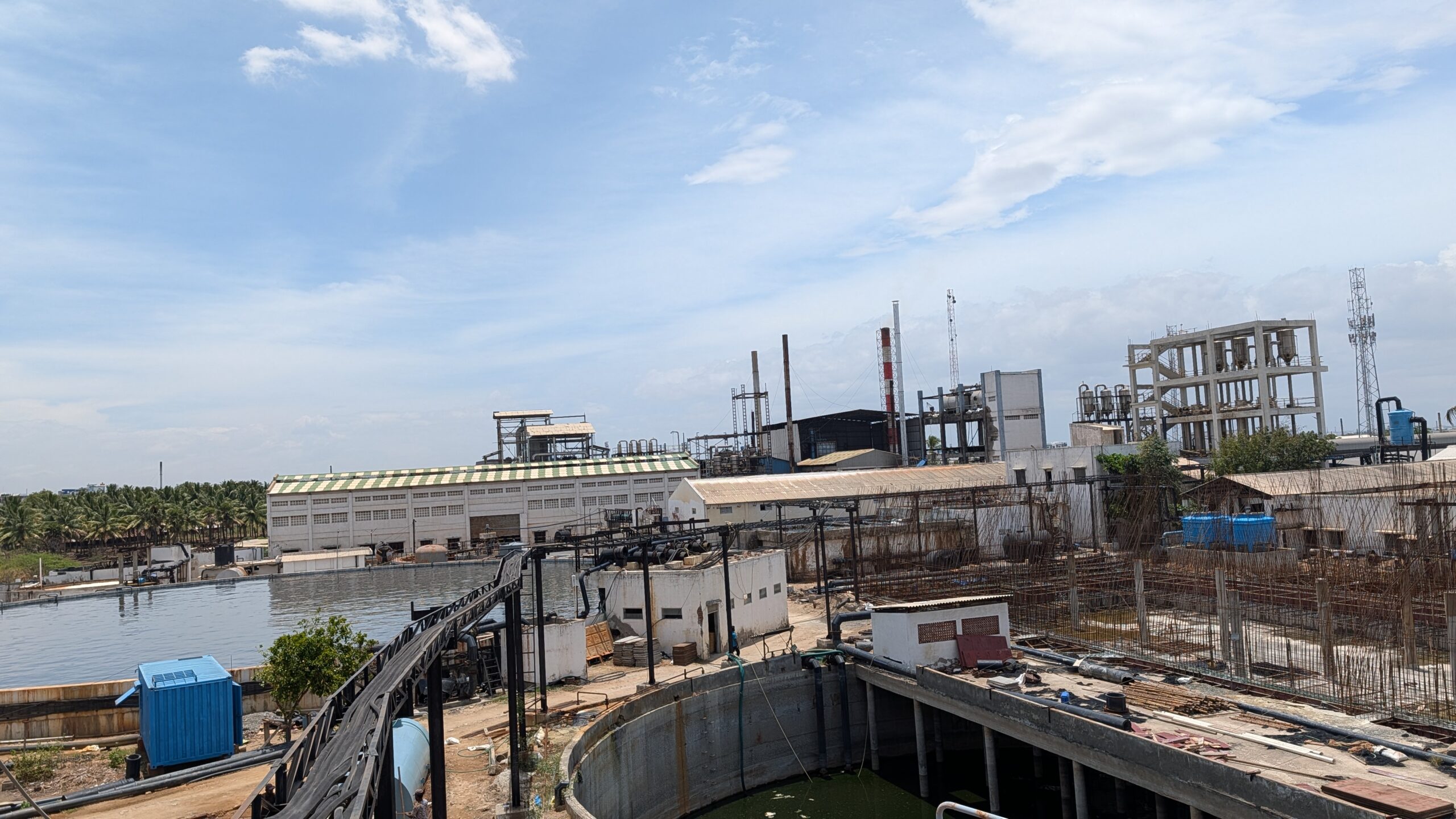
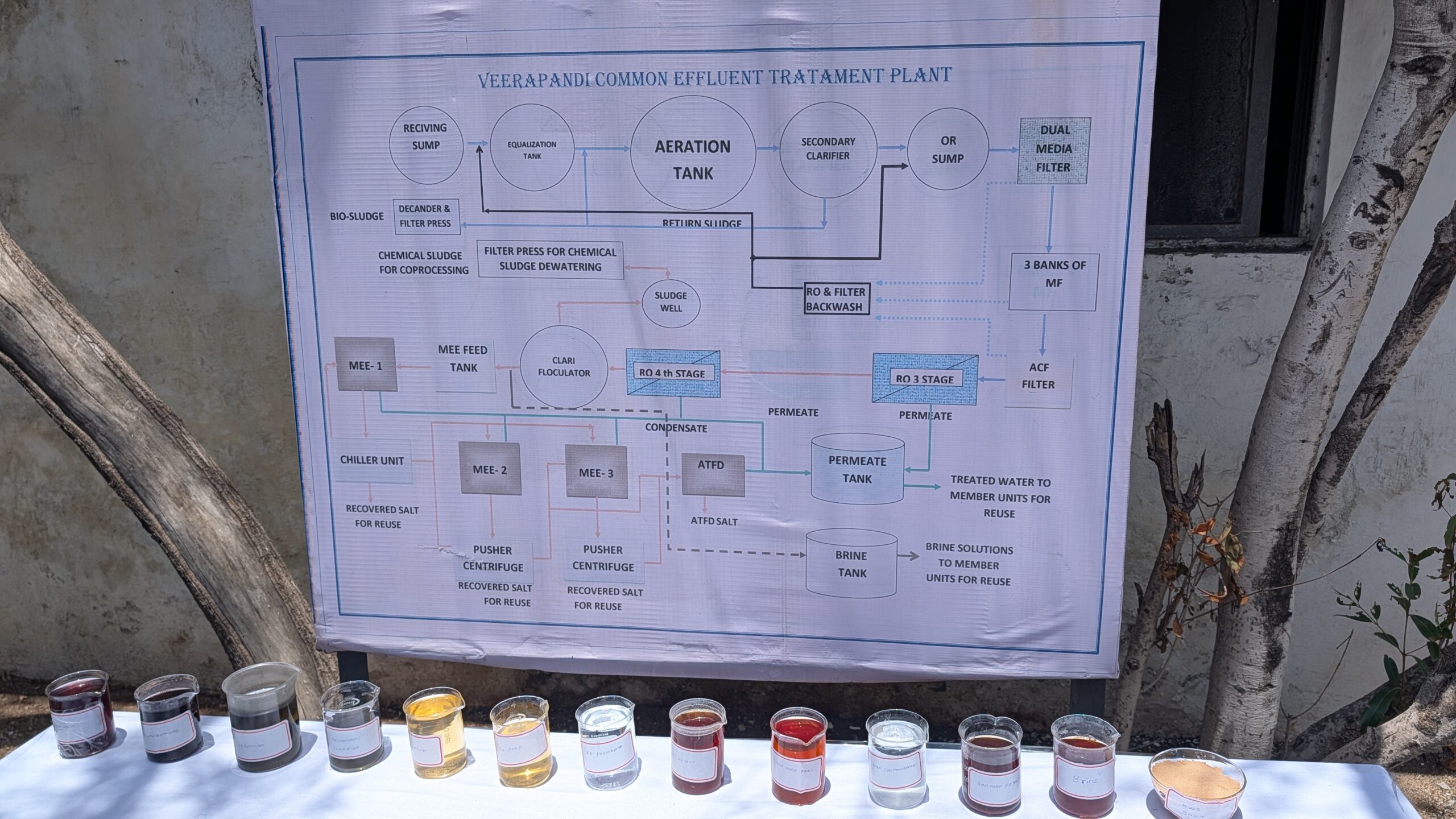
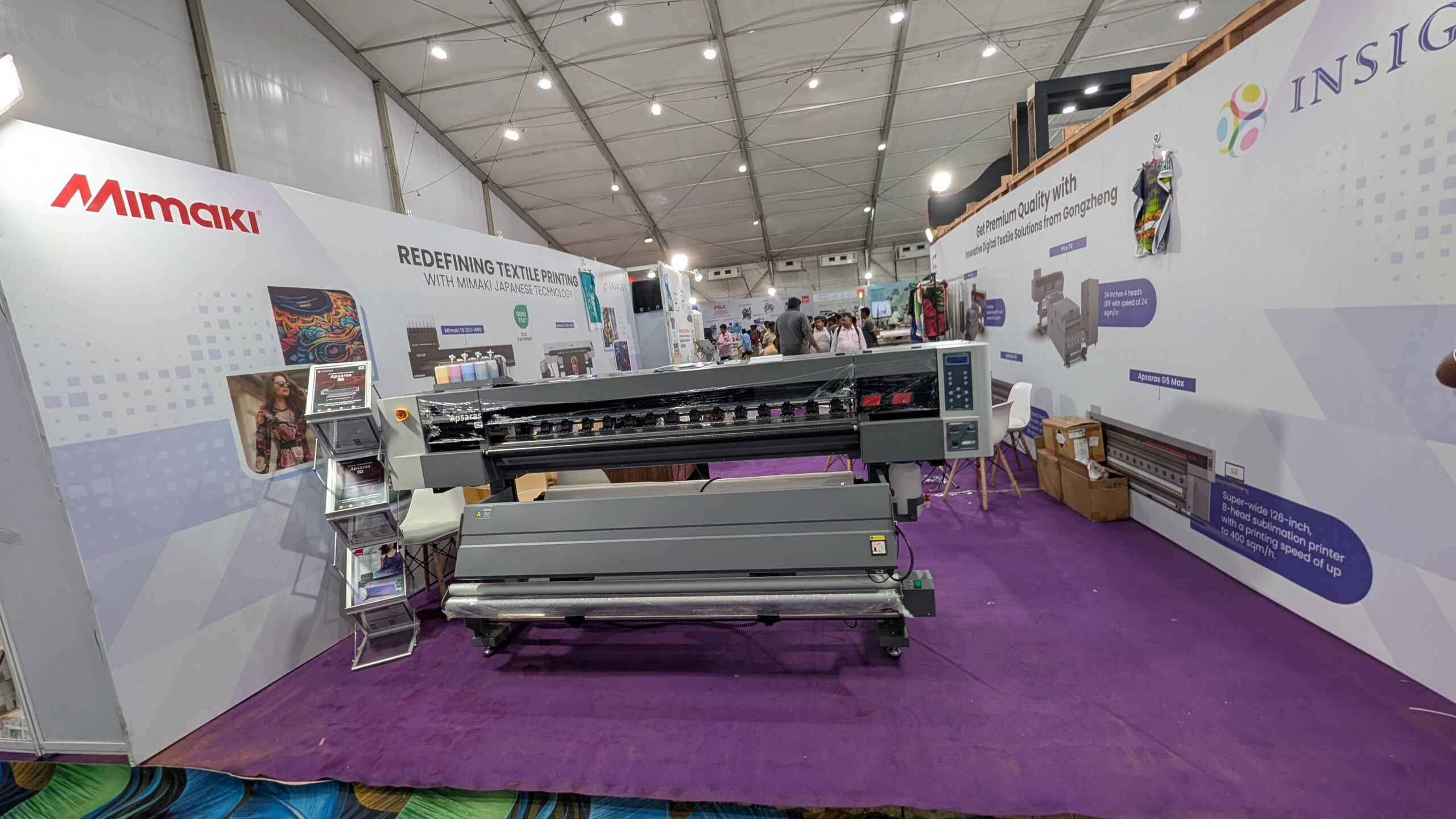
That contradiction — a global manufacturing engine that has decarbonised faster than almost anyone is telling — was the subject of a two-day workshop held in Tiruppur on 21 and 22 August 2026, organised by Auroville Consulting under the banner “Media for Climate Change: Future Ready for Global Markets,” in partnership with the Tiruppur Exporters’ Association (TEA), SIDBI, Guidance Tamil Nadu, the Madras Chamber of Commerce and Industry (MCCI), and the UK High Commission. Day one brought journalists from across Tamil Nadu into three back-to-back panel discussions on compliance, technology and finance, held alongside the inauguration at Tiruppur’s Knit Show. Day two took reporters onto the shop floor itself — a dyeing unit, a common effluent treatment plant, and an exporter’s own factory — to see whether the claims made in air-conditioned panel rooms hold up in the wet heat of a processing house.
They largely did.
The numbers behind the claim
Tiruppur’s decarbonisation story rests on three pillars, each of which panellists and site visits backed up with hard figures.
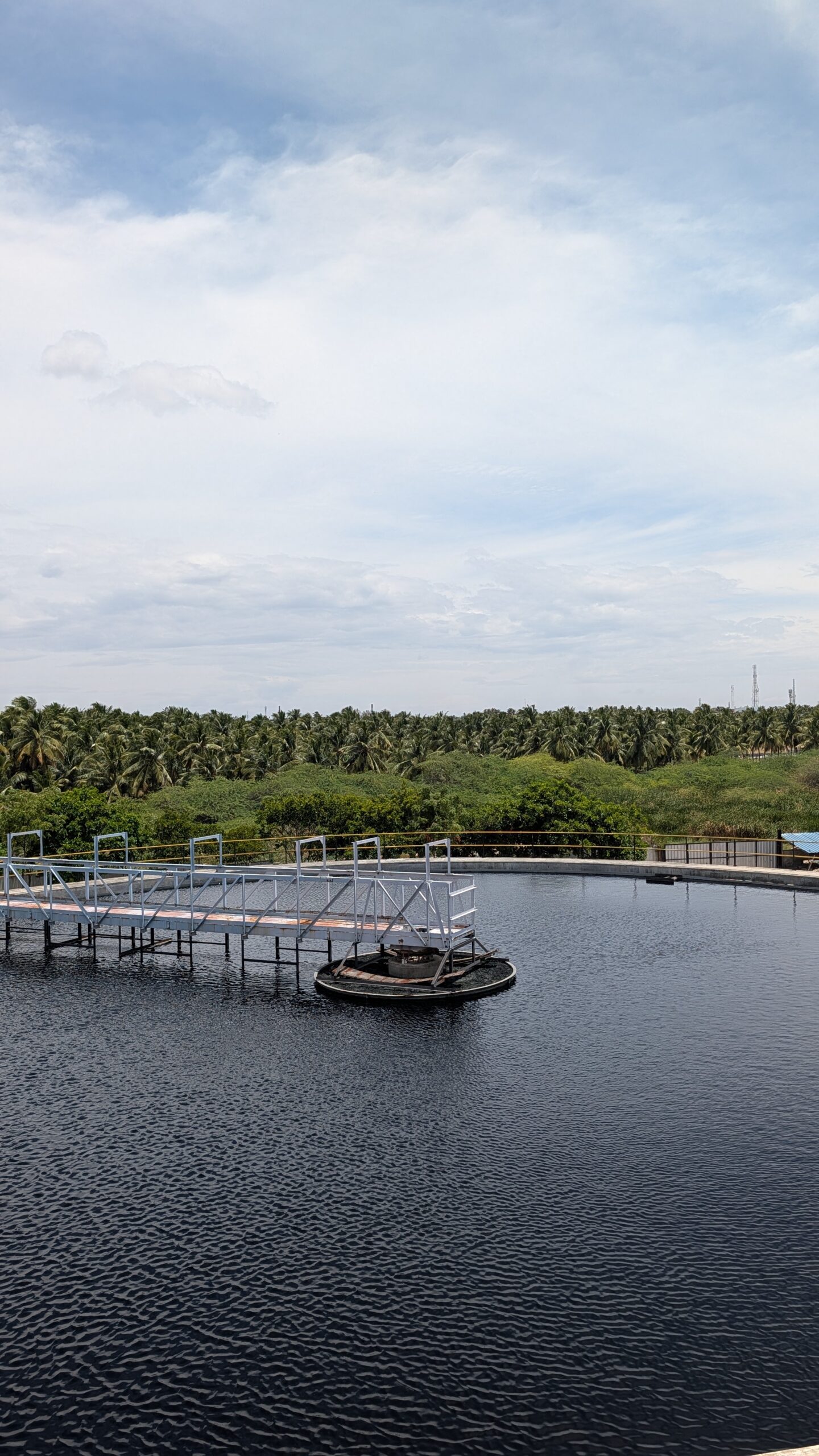
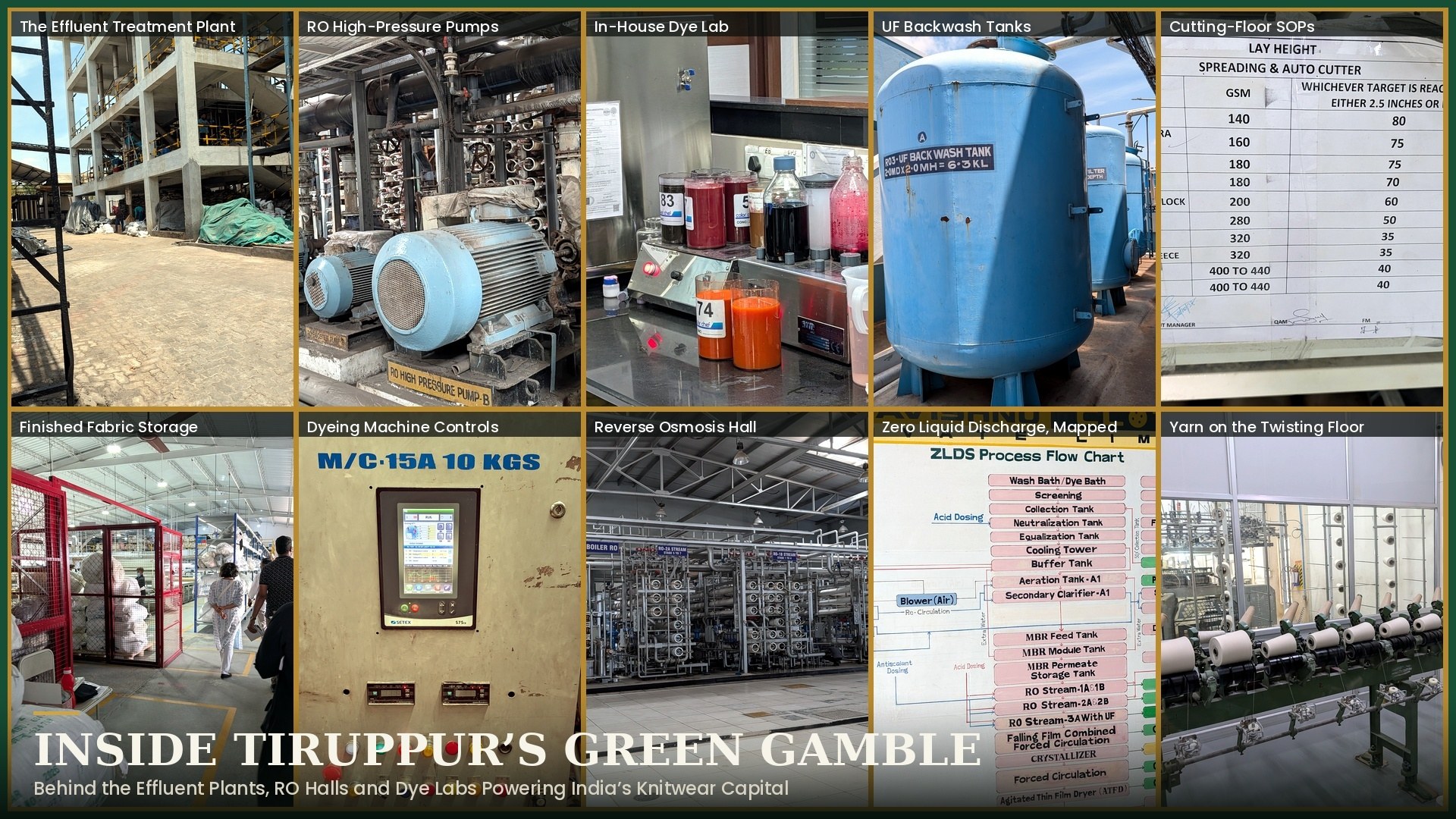
Water. The cluster that was once notorious for turning the Noyyal river the colour of whatever dye was in fashion that season now runs one of the only large-scale zero liquid discharge (ZLD) systems for textiles anywhere in the world. Eighteen Common Effluent Treatment Plants and sixty Individual Effluent Treatment Plants together process roughly 130 million litres of wastewater every single day, recycling about 96 percent of it back to member units. Groundwater in the region, which had collapsed under decades of unchecked extraction, has been recovering: TEA’s M. Anand, who chairs the association’s Branding, Sustainability & Business Promotion Subcommittee, told the compliance panel that levels which had dropped drastically twelve to fifteen years ago have since been restored to around 100 feet.
Energy. Tiruppur’s textile units collectively hold roughly 1,950 MW of renewable generation capacity — about 1,600 MW of wind and 350 MW of solar — against an actual consumption of around 350 MW. The arithmetic is startling for an industrial cluster: Tiruppur is a net power exporter, feeding a surplus of roughly 1,600 MW back into the Tamil Nadu grid. Panel two, on technology pathways, walked journalists through what sits behind that number — efficient utilities, low-carbon process heat, and a shift toward EV logistics — with speakers including Mr Sujith Thomas of the UK High Commission’s Automotive and Advanced Manufacturing Sector team and Mr Manikandan of Aspiration Cleantech Ventures stressing that these are not vendor pitches but verified, on-the-ground cost and emissions savings.
Land and biomass. Over nine years, TEA-linked plantation drives have put an estimated 2.2 million trees in the ground and helped rejuvenate thirteen to fourteen lakes, including Nanjulai Lake, now recognised as Tamil Nadu’s seventeenth bird sanctuary.
“Tiruppur stands as the world’s sole environmentally and socially governed textile cluster.” N. Thirukkumaran, TEA General Secretary & Director, ESSTEE Exporters India
Compliance is coming whether Tiruppur is ready or not
The reason this workshop existed at all is that the ground is shifting under every exporter’s feet. The European Union’s Carbon Border Adjustment Mechanism (CBAM) and its Digital Product Passport (DPP) initiative are steadily raising the documentation bar for anyone selling into Europe — moving from “tell us you’re sustainable” to “prove it, item by item, with verifiable data.” Panel one, moderated by MCCI Secretary-General Mrs Saraswathi, brought together Mr N. Thirukkumaran, TEA Joint Secretary Mr M. Anand and a CBAM/DPP specialist from Auroville Consulting to walk journalists through what these frameworks actually require on the ground — not in Brussels’ language, but in terms of what a supplier, a dye-house or a stitching unit has to change to comply.
The frustration in the room was audible. According to panellists, Tiruppur is, by its own reckoning, ahead of every other major Indian textile hub — Surat, Ludhiana, Kolkata included — in the underlying work that DPP-style traceability actually demands: metered effluent treatment, documented water recycling, renewable energy accounting, and functioning environmental infrastructure that can be audited rather than asserted. Yet that lead has not yet translated into a pricing advantage. Buyers, panellists said, are still often unable or unwilling to pay a premium for compliance that isn’t yet formally certified or benchmarked — leaving Tiruppur absorbing the cost of doing the right thing without capturing the commercial upside of being first.
That is expected to change. As global buyers move from asking nicely about sustainability to mandating it contractually — a shift CBAM and DPP are actively accelerating — panellists argued that Tiruppur’s early investment should convert from a cost centre into the cluster’s single biggest competitive advantage.
The money is starting to follow
Panel three turned to financing — how a transition this capital-intensive gets paid for. SIDBI’s Deputy General Manager Mr Ramachandran and TEA Joint Secretary Mr Kumar Duraiswamy, who is also CEO of Eastern Global Clothing, discussed climate-linked finance instruments and government incentive schemes designed to de-risk early adoption for smaller units that cannot self-fund a ZLD plant or a solar array. Mr Madheswaran, Treasurer of the Dyers Association, brought the conversation back to the units actually carrying the capital cost of compliance on their own balance sheets.
The scale of what is riding on this transition is considerable. Tiruppur’s exporters recorded roughly INR 46,000 crore in shipments in FY26, up from INR 44,747 crore the year before, and the cluster accounts for a majority of India’s total knitwear exports. TEA has set its sights on a INR 1-lakh-crore (roughly INR 1 trillion) export target by 2030 — a near-doubling that panellists linked directly to how effectively the cluster can convert its decarbonisation record into market access and pricing power, particularly as India’s broader textile export ambitions climb toward $100 billion by the same year.
What comes next
The closing session, led by Business Line Consulting Editor Mr Ramesh, turned the conversation back to the media itself: the compliance, technology and financing threads are, at bottom, a human story — jobs, worker safety in rising heat, and whether a sector employing over a million people in Tamil Nadu alone grows or shrinks over the next decade.
The workshop’s organisers were candid that operational readiness is, in many ways, the easier half of the problem. The harder half — getting the world to notice, verify and pay for what Tiruppur has already built — is the subject of the next article in this series, which looks at why Tiruppur’s decarbonisation story may be less an engineering problem than a branding one, and what blockchain-based traceability, carbon-credit mechanisms and a proposed Tiruppur Fashion Week could do to close that gap.
📸 Photo & video archive from this workshop
This report draws on photographs and video shot on the ground across both days — inside the Veerapandi treatment plant, on the dyeing-unit floor, at the exporter’s shop floor, and across the Knit Show exhibitor halls.
- Full Textile Industry Field-Visit Album — Day 2, all three site visits combined
- Dyeing Unit Visit — Jeyavishnu Clothing Pvt Ltd
- Water Treatment Plant Visit — Veerapandi CETP
- Exporter / Manufacturing Unit Visit — Esstee Exports India Pvt Ltd
- Knit Show / Knit Fair Gallery
Readers and partner publications needing full-resolution copies can write to neutralodishanews@gmail.com — INR 30 for access to any single folder above, or INR 99 for all-access across the full workshop archive. This nominal charge goes towards drive storage and picture-server maintenance.