
A Critical Look · Health & Society in India
The Two Indias of Brain Disease: How Ignorance, Class, and Silence Are Failing a Billion People
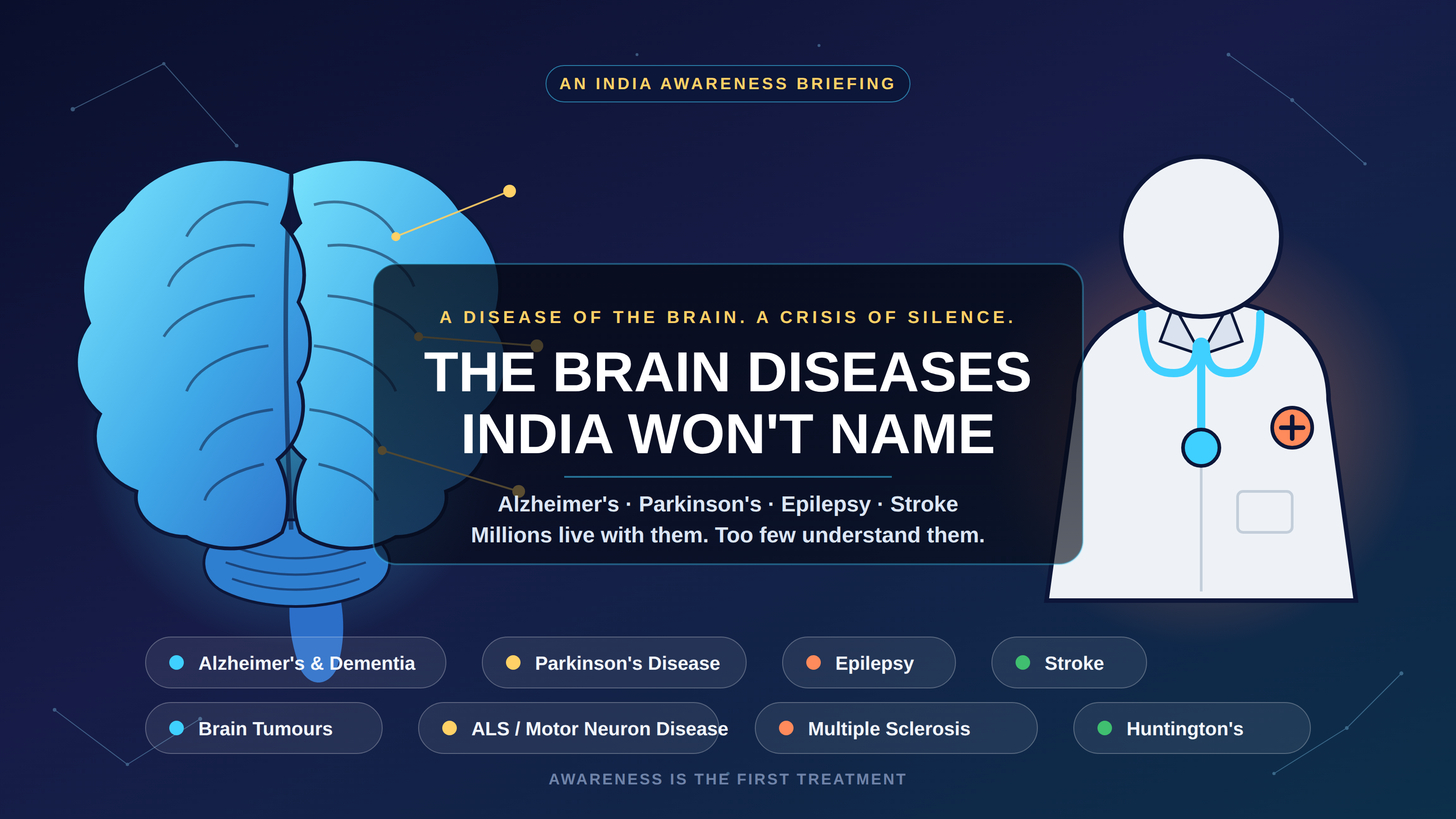
Alzheimer’s, Parkinson’s, epilepsy and stroke are far more common in India than most people realise. What separates a manageable illness from a devastating one is rarely medicine — it is money, geography, and awareness.
A crisis nobody is naming
Somewhere in a village in Jharkhand, an old man starts forgetting the names of his grandchildren, wandering out of the house at night, and accusing his son of stealing from him. The family does not call it Alzheimer’s disease. They call it budhapa ka pagalpan — “the madness of old age” — something shameful, something to be hidden, sometimes something to be feared. In the same week, in a gated apartment in South Delhi or Bandra, another family notices the same symptoms in a parent, and within days a private neurologist has ordered an MRI, a cognitive assessment, and a medication plan, and has referred them to a memory clinic and a support group.
Both families are living with the same disease. Only one of them knows it.
This is the real story of brain disease in India — not a story about missing cures, because for most of these conditions there genuinely is no cure anywhere in the world, but a story about a country where the difference between a manageable illness and a devastating, isolating one is not medicine but money, geography, and awareness. India has world-class neurologists, some of the busiest and most skilled movement-disorder and dementia specialists on earth, deep brain stimulation surgery available in half a dozen cities, and a thriving private hospital industry that treats medical tourists from across South Asia and the Gulf. And it has, simultaneously, districts with no neurologist at all, families who think a seizure is possession by a spirit, and elderly people living out the last years of a degenerative brain disease being scolded for “acting up” by relatives who have never heard the word “dementia.”
This article looks critically at that gap — who understands these diseases in India and who doesn’t, what it does to patients when nobody around them understands what is happening to their brain, and what a serious, well-resourced response would need to include. It also lays out, disease by disease, what these conditions actually are, what can currently be done about them, and where in India a family can go for real, specialist help.
The scale: this is not a niche problem
It is worth being blunt about the numbers, because the popular image of brain disease in India is that it is rare. It is not.
- Dementia (of which Alzheimer’s disease is the most common form) affects an estimated 8.8 million Indians aged 60 and above — a national prevalence of about 7.4% in that age group, according to a 2023 nationwide study published in Alzheimer’s & Dementia, using data from the Longitudinal Ageing Study in India. That number is markedly higher than an earlier widely cited estimate of 5.3 million from the Dementia in India 2020 report, and it puts India’s rate close to that of the United States and United Kingdom. The same research found that difficulty with everyday activities linked to cognitive decline is more common in rural areas than urban areas, and more common among women than men — precisely the population least likely to have a diagnosis, a caregiver support system, or disposable income for care.
- Parkinson’s disease affects roughly 5.76 lakh people (about 576,000) in India — around a tenth of the estimated global burden. Community studies have found that even in settings where Parkinson’s is common — such as elderly-care facilities with confirmed prevalence rates as high as 16.3% — “the knowledge about PD was deficient,” meaning that the people living closest to the disease, including caregivers, often could not identify what was happening to the person in front of them.
- Epilepsy has an especially stark treatment gap. In some rural belts, incidence is estimated at roughly 1 in 200 people. In one Jharkhand study, over 80 deaths were linked to epileptic seizures across a few districts in under five years, many during unattended seizures — drowning, falling into fire, or head injury — because there was no one nearby who understood what a seizure was or how to keep the person safe. The same state was found to have no neurologist posted at any district hospital, and only two neurologists serving its entire main referral institute. Families in these areas frequently rely on traditional healers and local herbs rather than modern anticonvulsant medication, not out of neglect but because that is what their community believes epilepsy is — a possession, a curse, a contagion to be avoided rather than a treatable electrical disorder of the brain.
- Stroke, a leading cause of acquired brain damage and long-term disability, has risen in India from an incidence of about 76 per 100,000 people in 1990 to 88 per 100,000 in 2021, with stroke-related deaths rising from 44 to 55 per 100,000 over the same period, according to Global Burden of Disease data. States such as West Bengal, Kerala, and Goa now show some of the country’s highest stroke burdens.
- Neurological disorders as a category are, per Global Burden of Disease analyses, among the fastest-growing contributors to death and disability in India, and their burden varies enormously by state — a strong signal that the difference is not biology but access, infrastructure, and awareness.
If you widen the lens from patients to the families who live with them — spouses, adult children, siblings who become full-time unpaid caregivers — the number of Indians whose daily lives are shaped by a brain disease, directly or indirectly, plausibly runs into several hundred million, in a country where the average household still has four to five members and multi-generational living is the norm. Once caregiving households, lost household income, and untreated rural cases are counted, it is a fair description of how widely the consequences of these diseases ripple outward from each undiagnosed or unsupported patient — touching something close to a billion Indians, directly or indirectly.
Two Indias, one disease
The critical point is not that brain disease exists in India — it exists everywhere. It is that India’s response to it is split almost perfectly along class lines.
For the upper-middle class and the wealthy, a brain disease is frightening but legible. There is a name for it, a specialist to see, a private hospital with an MRI machine and a neurologist who trained at NIMHANS or abroad, a memory clinic, a physiotherapist who understands Parkinson’s-specific rehabilitation, and increasingly, dementia day-care centres and trained home nurses who can be hired. These families can afford levodopa refills, seizure medication that doesn’t run out, palliative support at the end of life, and — critically — they have the social capital and language to describe the disease honestly to relatives, employers, and each other. They can tell a workplace “my father has Parkinson’s and needs me to work from home twice a week” without shame. Diagnosis, in this India, is the beginning of a manageable, if hard, journey.
For the majority — rural India, the urban poor, and much of the lower middle class — the same disease often has no name at all. It is “old age,” “weakness,” “getting mad,” “being touched by something.” Multiple community studies cited above found that even where a disease is common, the people around the patient frequently cannot identify it. This is not a failure of intelligence; it is a failure of exposure. Primary health centres are not staffed or trained to recognise early Parkinson’s tremor or the subtle cognitive changes of early dementia. There is often no neurologist within a hundred kilometres — a documented reality in states like Jharkhand, where not a single district hospital employs one. Government insurance schemes and outreach campaigns, where they exist, are overwhelmingly built around infectious disease, maternal health, and more recently cardiovascular risk and cancer; chronic neurodegenerative disease rarely gets a mass-awareness budget or a district-level camp of its own.
The disease is often the second tragedy. The first is what happens to the patient once the people around them decide they are simply “mad,” “difficult,” or “cursed.”
Patients with dementia are, in some communities, restrained, locked in rooms, or left alone for hours because a wandering, confused elder is seen as an embarrassment rather than someone with a diagnosable brain condition. Patients with epilepsy are sometimes abandoned by spouses over folk beliefs that seizures are contagious or a sign of possession. Patients with Parkinson’s are mocked for their tremor and shuffling gait, or accused of being drunk. And in almost every under-resourced household, the caregiving burden — bathing, feeding, managing incontinence, preventing falls, staying up through nights of confusion or seizures — falls on one person, usually a woman, usually with no training, no respite, no support group, and no income of her own because she has had to give up work to provide full-time care.
This is what makes the situation so damaging for the patient in a way that goes beyond the biology of the disease itself: a person with Alzheimer’s in an aware, resourced household loses cognitive function but retains dignity, routine, and safety. A person with the identical diagnosis in an unaware household can lose all three, on top of the disease itself.
Why the awareness gap persists
A few structural reasons explain why this is not closing on its own:
Neurology is desperately understaffed relative to need. India has one of the lowest neurologist-to-population ratios in the world, and those neurologists are heavily concentrated in metro areas and a handful of large private and public referral hospitals. A district with a million people may have no specialist who can confidently diagnose Parkinson’s disease or interpret an EEG.
Primary and community health workers are rarely trained to recognise neurological symptoms. ASHA workers and primary care doctors are trained extensively on maternal health, tuberculosis, and increasingly diabetes and hypertension, but early-stage brain disease symptoms — a subtle tremor, slowed thinking, personality change, a single unwitnessed seizure — are easy to miss or misattribute to normal ageing or “stress” unless someone is specifically looking for them.
Stigma and folk explanation fill the vacuum where medical explanation is absent. When no one has told a community what a seizure or memory loss actually is, older, culturally available explanations — possession, curses, punishment for past sins, simple madness — step in. These aren’t signs of ignorance in a moral sense; they are what happens whenever a biological phenomenon isn’t explained, anywhere in the world, throughout history.
Public health messaging in India has, until recently, focused almost entirely on communicable disease and a narrow set of “lifestyle” non-communicable diseases (diabetes, hypertension, cardiovascular disease, some cancers). Brain diseases rarely feature in the same mass-media health campaigns, despite the Global Burden of Disease data showing they are a rapidly rising cause of disability.
The cost of long-term neurological care is catastrophic for poor households, and India’s insurance and welfare architecture is only beginning to catch up. Out-of-pocket health spending remains one of the leading causes of families falling into poverty in India, and long-term conditions requiring years of medication, physiotherapy, and caregiving are exactly the kind of illness that ordinary hospitalisation-based insurance schemes are least well designed to cover.
The major brain diseases: what they are, what can be done, and what patients need
The conditions below are grouped as “brain diseases” in the everyday sense: chronic neurodegenerative diseases, seizure disorders, and major acquired brain injuries. None of the neurodegenerative diseases below currently have a cure anywhere in the world — that is a global reality, not a failure specific to India — but every one of them can be managed far better than the “nothing can be done” fatalism that often surrounds them in low-awareness settings.
1 Alzheimer’s disease and other dementias
- What it is
- A progressive loss of brain cells that gradually destroys memory, thinking, language, and eventually the ability to carry out basic daily activities. Alzheimer’s is the most common cause of dementia, followed by vascular dementia (caused by small strokes) and others such as Lewy body and frontotemporal dementia.
- Symptoms
- Early on — forgetting recent conversations or appointments, repeating questions, losing track of dates, misplacing items, mild word-finding difficulty. As it progresses — getting lost in familiar places, poor judgment, personality and mood changes, difficulty recognising family members, and eventually loss of speech, mobility, and continence.
- Current stage of treatment
- There is no cure. Existing Indian-approved medications (such as cholinesterase inhibitors and memantine) can modestly slow symptom progression and help manage behavioural symptoms for a period, but do not stop the underlying disease. Newer disease-modifying antibody drugs approved in the United States and a few other countries in recent years remain largely unavailable, unapproved, or unaffordable for most Indian patients at present. The most effective “treatment” available today is early diagnosis paired with structured, non-drug care: routine, cognitive stimulation, physical activity, safety-proofing the home, and trained caregiving.
- What happens to the patient
- A slow, years-long decline in independence, ending in complete dependence on others for all daily needs. It is fatal, usually through complications such as infections, in its late stages.
- Care needs
- A predictable daily routine; a safe, hazard-free home; patient, non-confrontational communication (never arguing someone out of a false memory); help with all daily tasks as the disease advances; and — critically — support and respite for the caregiver, who is at serious risk of burnout, depression, and their own health decline.
2 Parkinson’s disease
- What it is
- A progressive disorder caused by the loss of dopamine-producing neurons in the brain, affecting movement control and, over time, some non-movement functions too.
- Symptoms
- Tremor (often starting in one hand at rest), slowness of movement, muscle stiffness, stooped posture and shuffling gait, softer speech, reduced facial expression, and later in the disease, balance problems, sleep disturbance, depression, and in some patients, cognitive decline.
- Current stage of treatment
- No cure, but among the most treatable of neurodegenerative diseases when caught and managed well. Levodopa and related medications remain highly effective at controlling symptoms for years. For patients who respond well to medication but develop complications over time, deep brain stimulation (DBS) surgery — implanting electrodes to regulate abnormal brain signals — is available in India at several major centres and can dramatically improve quality of life.
- What happens to the patient
- With good treatment, many people live for years with a good quality of life, though motor symptoms and, in a subset of patients, cognitive changes tend to worsen over the long term. Without treatment or with late diagnosis, mobility, independence, and swallowing can deteriorate much faster, with higher risk of falls, aspiration, and injury.
- Care needs
- Consistent medication timing (delays can cause sudden symptom flare-ups), fall-prevention measures at home, physiotherapy and speech therapy, and emotional support, since depression is common and under-recognised in Parkinson’s patients.
3 Epilepsy
- What it is
- A disorder of the brain’s electrical activity that causes recurrent, unprovoked seizures. It is one of the most common and most stigmatised neurological conditions in India.
- Symptoms
- Vary widely — from brief lapses of awareness (absence seizures) to convulsive seizures with loss of consciousness, muscle stiffening, and jerking movements, sometimes with tongue-biting or loss of bladder control.
- Current stage of treatment
- Highly treatable. With the right anti-seizure medication, taken consistently, 60–70% of people with epilepsy globally can become seizure-free, and many can lead entirely normal lives, including working, driving under medical guidance, and having children. India’s documented “treatment gap” — the proportion of people with epilepsy who are not receiving appropriate treatment — remains very high in rural areas, driven far more by stigma, superstition, and lack of access to a neurologist than by any inherent difficulty of the condition itself.
- What happens to the patient
- With proper treatment, the outlook is often excellent. Without it, patients face repeated injury risk (falls, burns, drowning during unsupervised seizures — a documented cause of preventable death in several Indian states), social exclusion, difficulty marrying or keeping employment due to stigma, and in some cases escalating seizure frequency.
- Care needs
- Consistent access to medication (interruptions are a major cause of breakthrough seizures), basic seizure first-aid training for family members (turning the person on their side, protecting the head, never restraining or forcing anything into the mouth), and — perhaps most urgently in India — community education to dismantle the myths that drive families to abandon modern treatment for faith healers.
4 Stroke (and its lasting brain damage)
- What it is
- Not a single chronic disease but a sudden interruption of blood flow to the brain — either a blockage (ischaemic stroke, the majority) or a bleed (haemorrhagic stroke) — that can kill brain tissue within minutes and cause lasting disability. It is included here because its aftermath — paralysis, speech loss, cognitive change — is one of the most common causes of acquired brain disability in India.
- Symptoms
- The acute “FAST” warning signs: sudden Face drooping, Arm weakness, Slurred Speech — Time to call for emergency help immediately, since treatment within a narrow window (a few hours) can prevent permanent damage.
- Current stage of treatment
- Acute clot-dissolving therapy and, in select cases, clot-retrieval procedures can dramatically reduce disability if given fast enough — but this requires a stroke-ready hospital reachable within hours, which is precisely what much of rural India lacks. Rehabilitation afterward (physiotherapy, speech therapy, occupational therapy) is what determines how much function a survivor regains.
- What happens to the patient
- Outcomes range from full recovery to permanent paralysis, loss of speech, or death, depending overwhelmingly on how quickly treatment was received — making this the brain condition where India’s rural-urban ambulance and hospital-access gap translates most directly and measurably into avoidable, lifelong disability.
- Care needs
- Rapid emergency transport and recognition of symptoms (most lost time in India is “delay to hospital,” not delay within the hospital); sustained rehabilitation, often for months; support for depression, which is common after stroke; and home modifications for mobility.
5 Brain tumours
- What it is
- Abnormal growths within the brain, which may be non-cancerous (benign) or cancerous (malignant), arising from brain tissue itself or spreading there from elsewhere in the body.
- Symptoms
- Persistent or worsening headaches (especially in the morning), new-onset seizures, progressive weakness or numbness on one side, vision or speech problems, balance difficulties, or personality and cognitive changes — symptoms that depend heavily on the tumour’s location.
- Current stage of treatment
- Treatment depends entirely on the tumour type, grade, and location, and includes neurosurgery, radiotherapy, and chemotherapy, often in combination. Many benign tumours can be effectively cured or controlled long-term with surgery. High-grade malignant brain tumours remain difficult to cure, though modern neurosurgical and oncological care can meaningfully extend and improve quality of life.
- What happens to the patient
- Highly variable — from full recovery after removal of a benign tumour to a serious, life-limiting illness with a malignant, high-grade tumour. Early detection substantially changes outcomes, which is why persistent unexplained headaches or new seizures in an adult should never be dismissed.
- Care needs
- Rapid access to neuro-imaging (CT/MRI) and a specialist neuro-oncology team; post-surgical rehabilitation; and, for advanced cases, palliative and psychological support for the patient and family.
6 Motor neuron disease / ALS (Amyotrophic Lateral Sclerosis)
- What it is
- A rare, rapidly progressive disease that destroys the nerve cells controlling voluntary muscles, while typically leaving the mind intact.
- Symptoms
- Progressive muscle weakness, twitching, cramping, slurred speech, and eventually difficulty swallowing and breathing.
- Current stage of treatment
- No cure. A small number of medications can modestly slow progression. Care is centred on supportive measures — assisted ventilation, feeding support, communication aids — that can meaningfully extend both survival and quality of life when started early.
- What happens to the patient
- A relentless progressive loss of movement, speech, swallowing, and breathing over a typical span of two to five years, though this varies. Awareness and mind are usually preserved throughout, which makes early access to supportive equipment and communication technology especially important for dignity and quality of life.
- Care needs
- Specialised multidisciplinary care (neurology, respiratory support, nutrition, physiotherapy, speech therapy), assistive communication devices as speech is lost, and intensive family/caregiver support, since full physical dependence develops relatively quickly.
7 Multiple sclerosis (MS)
- What it is
- An autoimmune disease in which the body’s immune system attacks the protective covering of nerve fibres in the brain and spinal cord, disrupting communication between the brain and the rest of the body. Less common in India than in Western countries, but increasingly recognised.
- Symptoms
- Vary widely and can include vision problems, numbness or tingling, muscle weakness, balance and coordination difficulties, and fatigue, often in relapsing-remitting episodes.
- Current stage of treatment
- No cure, but a growing range of disease-modifying therapies (increasingly available in India’s larger cities, though at high cost) can significantly reduce relapse frequency and slow disability progression, especially when started early.
- What happens to the patient
- Highly variable — many patients, especially with early treatment, live long, largely independent lives with periodic flare-ups; a minority experience a more steadily progressive, disabling course.
- Care needs
- Early neurological diagnosis (MS is frequently misdiagnosed or diagnosed late in India due to low awareness of the condition), consistent access to disease-modifying medication, physiotherapy, and management of fatigue and mood.
8 Huntington’s disease
- What it is
- A rare, inherited (genetic) disorder that causes progressive breakdown of nerve cells in the brain, affecting movement, cognition, and psychiatric state. Because it is genetic, it also raises hard questions for family members about genetic testing and family planning.
- Symptoms
- Involuntary jerking movements (chorea), clumsiness, cognitive decline, and mood or psychiatric changes including depression and irritability, typically appearing in mid-adulthood.
- Current stage of treatment
- No cure and no way to slow the underlying disease at present; treatment is limited to managing movement symptoms and psychiatric symptoms with medication.
- What happens to the patient
- A steady decline over 10–20 years in movement, thinking, and independence.
- Care needs
- Genetic counselling for the family (each child of an affected parent has a 50% chance of inheriting the gene), psychiatric support, swallowing and nutrition management as the disease advances, and full-time care in later stages.
Where to actually go: major Indian centres for brain-disease diagnosis and care
This list is necessarily partial — India has many strong regional centres beyond those named here — but these are institutions with an established, specialised track record in diagnosing and treating the conditions above. Public/government institutes are listed first because they are typically far more affordable, though also more stretched for appointments; private centres are listed after.
Public / Government / Trust-run Referral Institutes
- NIMHANS (National Institute of Mental Health and Neurosciences), Bengaluru — India’s foremost public neurosciences institute, with a dedicated Parkinson’s Disease and Movement Disorders (PDMD) clinic offering deep brain stimulation, along with specialist services in epilepsy, neuro-oncology, and neuropsychiatry (including dementia).
- AIIMS, New Delhi — Comprehensive neurology and neurosurgery departments, including a dedicated movement disorders/Parkinson’s clinic offering DBS, and stroke, epilepsy, and cognitive disorder services; other AIIMS campuses (Bhopal, Jodhpur, Rishikesh, and others) are steadily building similar capacity.
- PGIMER, Chandigarh — A major North Indian referral centre with a long-established neurology department covering epilepsy, movement disorders, and stroke.
- CMC (Christian Medical College), Vellore — One of India’s oldest and most respected neurosciences departments, covering neurology, neurosurgery, and long-term care for chronic neurological disease.
- Sree Chitra Tirunal Institute for Medical Sciences and Technology (SCTIMST), Thiruvananthapuram — A specialised neurosciences institute with a dedicated Cognition & Behavioural Neurology division for dementia, alongside strong neurosurgery and neurology programmes.
- State medical college & regional neurology departments more broadly (e.g., NIMS Hyderabad, KEM and Bombay Hospital Mumbai, R.G. Kar and NRS in Kolkata) provide lower-cost specialist access in their regions, though appointment waiting times can be long.
Major Private Centres with Strong Neuroscience Programmes
- Medanta – The Medicity, Gurugram — Advanced neurology and neurosurgery, including stroke and brain tumour care.
- Fortis Memorial Research Institute / Fortis Hospitals, Gurugram and Delhi — Movement disorder and Parkinson’s treatment including surgical options, aneurysm and stroke care.
- Apollo Hospitals (Chennai, New Delhi, Hyderabad, Navi Mumbai and other cities) — Wide network with dedicated stroke units, neuro-oncology, and neurology/neurosurgery programmes.
- Manipal Hospitals (Bengaluru, Delhi, Pune, and other cities) — Dedicated Parkinson’s disease and movement disorder clinics, plus stroke, epilepsy, and dementia services.
- Kokilaben Dhirubhai Ambani Hospital, Mumbai — Strong neuro-oncology and minimally invasive neurosurgery programme.
- Max Super Speciality Hospital and BLK-Max, New Delhi — Epilepsy, brain tumour, and complex spine/brain surgery.
- Artemis Hospital, Gurugram — Deep brain stimulation, epilepsy, and stroke thrombolysis services.
Community & Caregiver-support Organisations
- Alzheimer’s and Related Disorders Society of India (ARDSI) — India’s principal dementia-focused NGO, with chapters in cities including Delhi, Kolkata, Kochi, and others, running day-care centres, helplines, caregiver training, and awareness campaigns.
- Dementia Care Notes — An independent, widely used resource network connecting Indian families to city-wise dementia care services, support groups, and practical caregiving guidance.
- Kerala’s community-based palliative care network — A model of trained local volunteers and home-visiting teams supporting patients with long-term illness, including advanced neurological disease, that other states have begun studying and replicating.
What genuine change would require
A critical article should not stop at describing the problem. Closing this gap in India would plausibly require, at minimum: mandatory basic neurological-symptom training for ASHA workers and primary care doctors, so that a tremor, a seizure, or early memory loss is recognised at the first point of contact rather than the fifth; district-level neurology outreach camps of the kind already used for eye care and cardiac screening; mass-media awareness campaigns that explicitly name these diseases in regional languages, aimed at breaking the “madness” and “curse” framing that drives families away from treatment; insurance and welfare mechanisms that actually cover the years-long cost of chronic neurological care rather than only acute hospitalisation; and, most fundamentally, an official acknowledgment that brain disease is not a rich person’s problem or an old person’s inevitability, but a rapidly growing public health emergency that today runs on two separate, radically unequal tracks depending on a family’s postcode and income.
Until that changes, the cruelty described at the start of this article will keep repeating itself in millions of homes: not primarily the cruelty of the disease, which no country has yet cured, but the entirely preventable cruelty of a patient losing their mind or their body in a house full of people who do not know what is happening to them, and who — with a little more awareness — could have understood, adapted, and cared for them with the dignity every patient deserves.
Sources
- Prevalence of dementia in India: National and state estimates from a nationwide study — Alzheimer’s & Dementia / PubMed
- New estimate of dementia prevalence shows magnitude of India’s challenge — Fogarty International Center, NIH
- Estimating the number of people living with dementia at different stages in India: A Delphi process — PMC
- A Narrative Review of Community-Based Epidemiological Studies on Parkinson’s Disease in India — PMC
- The Landscape of Parkinson’s Disease Treatment in India: A National Cross-Sectional Survey of Clinical Practitioners — PMC
- Epilepsy Treatment Gap in India: Is It Too High a Peak to Scale? — PMC
- Epilepsy Treatment Gap in India: Addressing Rural Mortality — OC Academy
- Myths and Superstition about Epilepsy: A Study from North India — PMC
- Analyzing stroke burden and risk factors in India using data from the Global Burden of Disease Study — Scientific Reports
- The burden of neurological disorders across the states of India: the Global Burden of Disease Study 1990–2019 — The Lancet Global Health
- Neurological disorders in India: past, present, and next steps — The Lancet Global Health
- Understanding, experiences and attitudes of dementia in India: A qualitative study — STRiDE
- Dementia stigma in India — STRiDE
- Palliative Care in Kerala, India: A Regional Community-Based Model — Journal of Pain and Symptom Management
- Top Neurosurgery Hospitals in India — DocIndia
- Parkinson’s Disease and Movement Disorders (PDMD) Clinical Services — NIMHANS
- Neurology Department and Cognition & Behavioural Neurology — SCTIMST
- Neurosciences — CMC Vellore
- Alzheimer’s and Related Disorders Society of India (ARDSI)
- Dementia Caregiver Resources across India — Dementia Care Notes