Behind the Stalls of Knit Show 2026: The Fabric Makers, Machine Builders and Recyclers Powering Tiruppur’s Sustainability Push
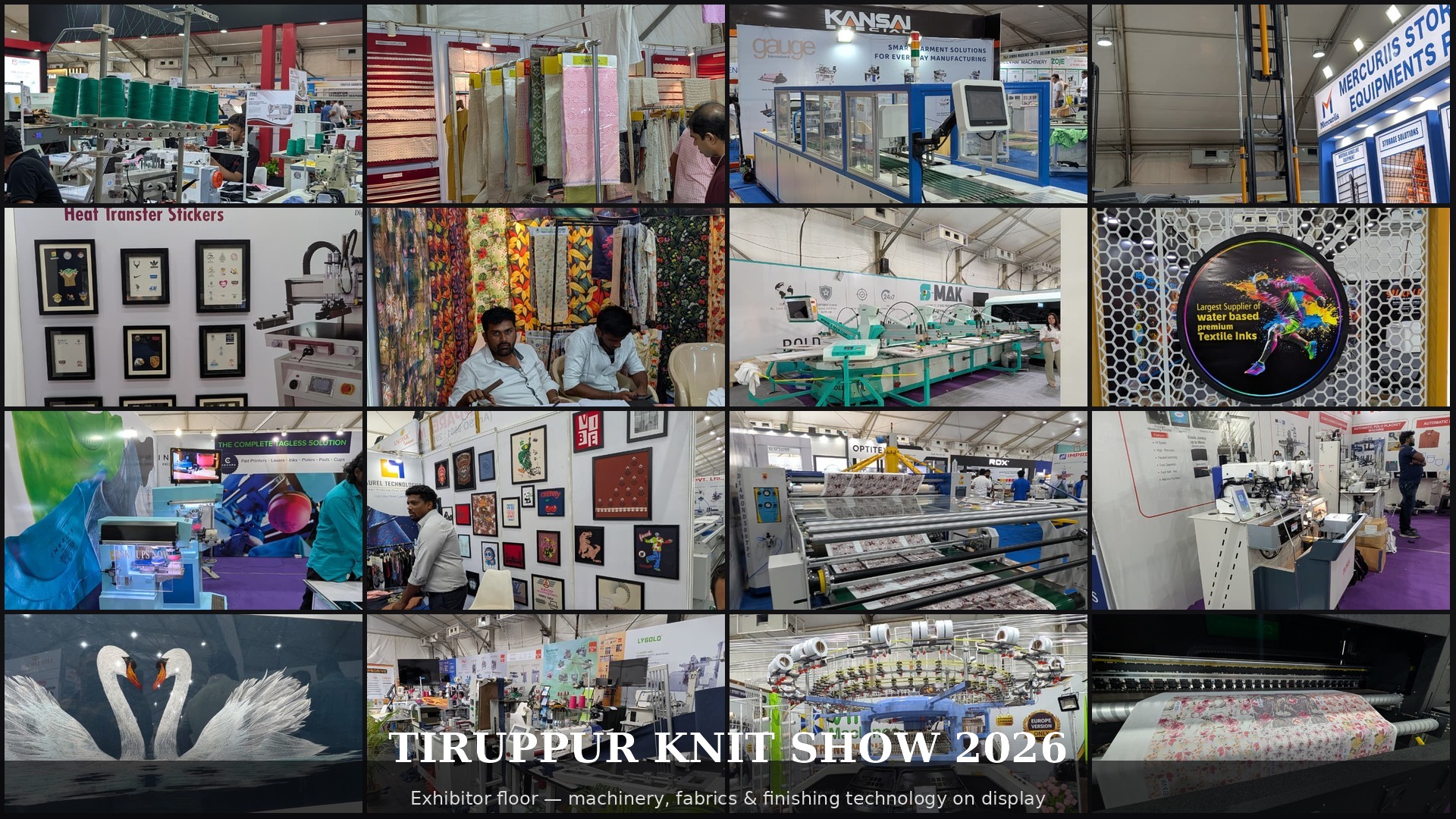
If the panel rooms made the case for Tiruppur’s decarbonisation in numbers, the Knit Show floor made it in stalls — certified fabric mills, finishing-equipment makers and packaging vendors, all selling the transition itself.
If the panel discussions at this year’s “Media for Climate Change: Future Ready for Global Markets” workshop made the case for Tiruppur’s decarbonisation in numbers, the Knit Show floor made it in stalls.
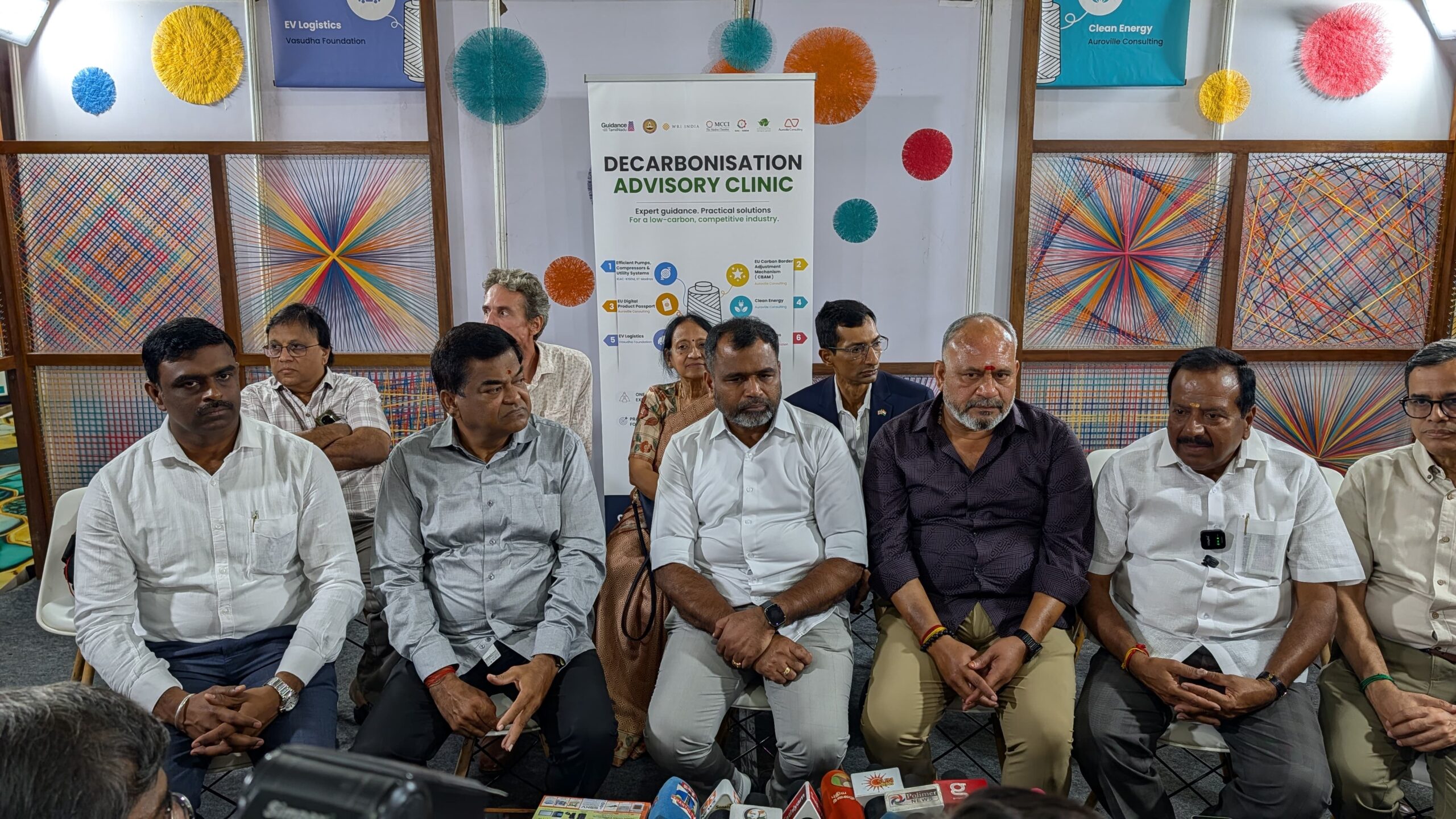
The workshop — held 21–22 August 2026 and organised by Auroville Consulting with the Tiruppur Exporters’ Association (TEA), SIDBI, Guidance Tamil Nadu, MCCI and the UK High Commission — was deliberately built around the Knit Show, Tiruppur’s flagship trade exhibition for garment and textile machinery, fabrics, fashion accessories and processing technology. Day one opened not at the conference venue but at the Knit Show itself, with an inaugural session in Hall 4 before delegates moved to the Ginger Hotel for the day’s panel discussions. Day two closed the loop, bringing journalists back to the Knit Show floor for a visit to the workshop’s own Decarbonisation Advisory Clinics — a hands-on counterpart to two days of panel-room discussion.
A trade show built around a transition
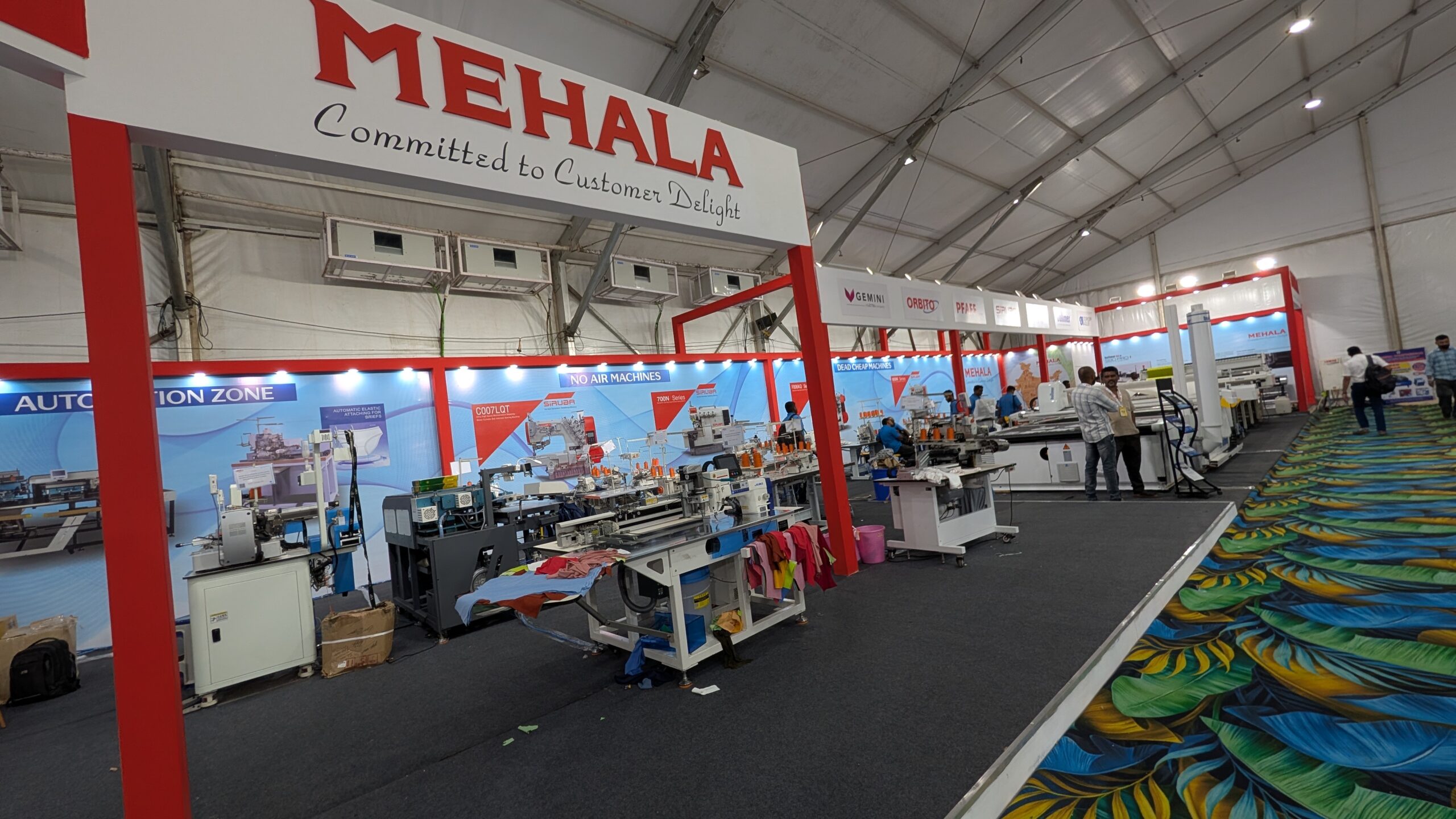
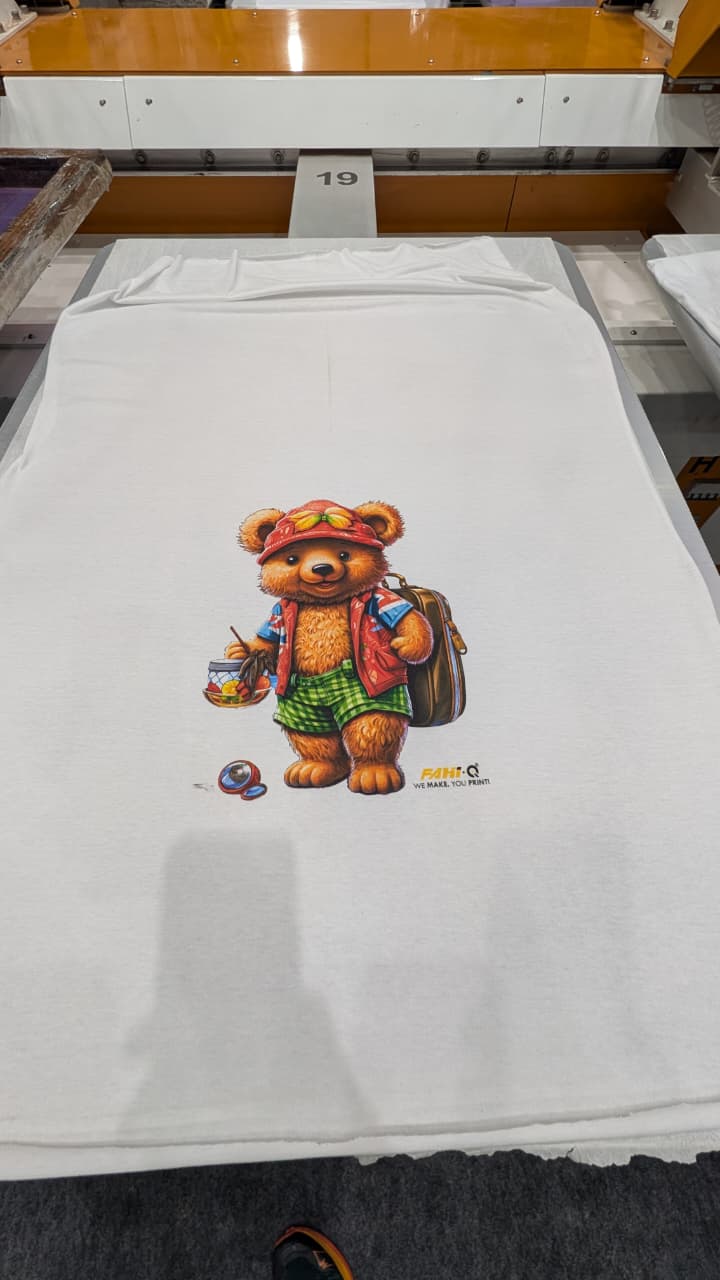
Walking the Knit Show floor made the abstractions of the panel sessions concrete. Exhibitor stalls were not simply selling machinery and fabric — many were explicitly selling the sustainability transition itself as their core pitch. Dhivyam Fabrics, a Tiruppur-based knitted-fabric manufacturer, built its entire stall messaging around “recycled fabrics for a sustainable future,” advertising Global Recycled Standard (GRS) certification across its single jersey, loop-knit and Lycra fabric ranges and positioning itself as a “preferred fabric partner for corporate orders” — the kind of certified, traceable supply-chain vendor that DPP-era buyers are increasingly required to source from.
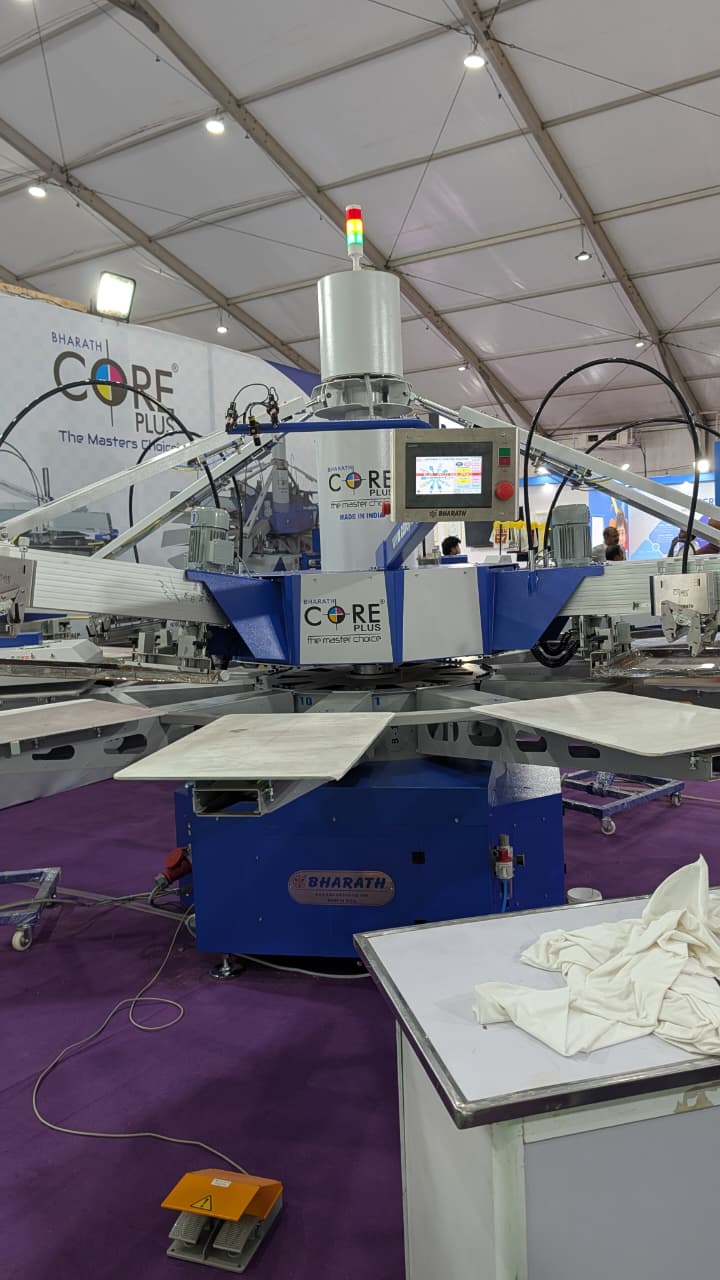
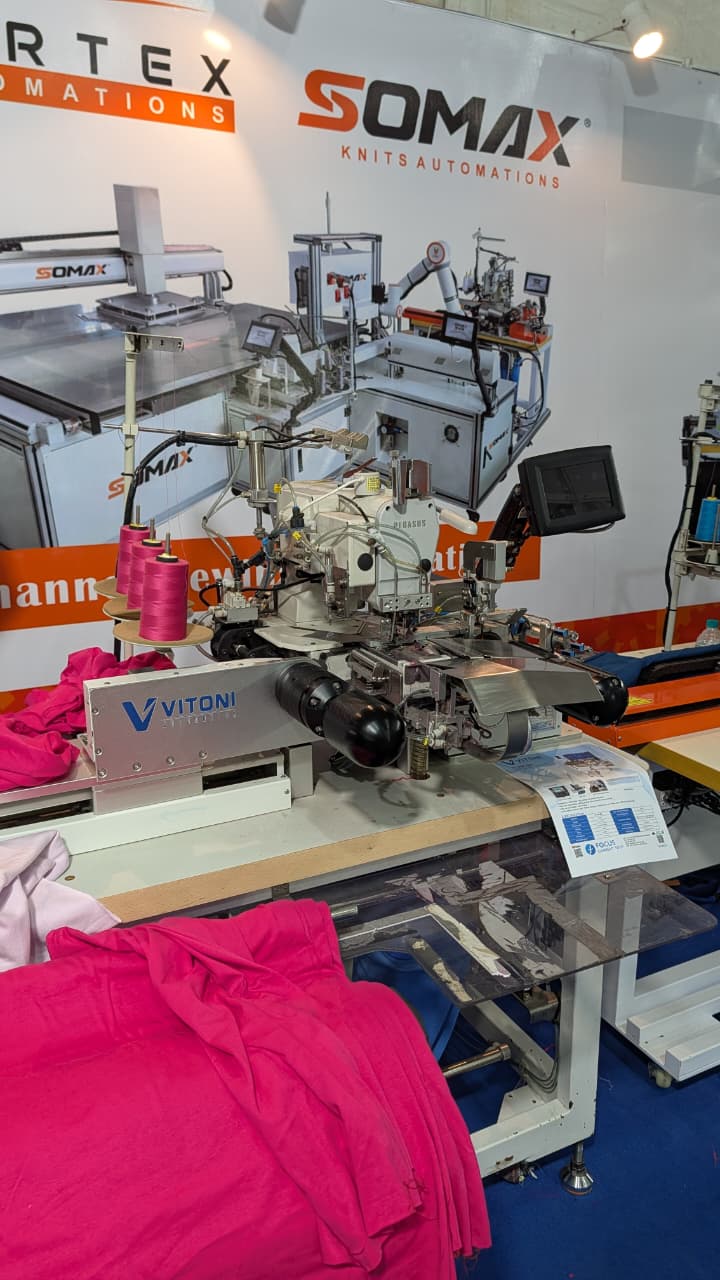
Elsewhere on the floor, the machinery side of the transition was equally visible. Sunrise Garment Machinery Private Limited, an ISO-9001:2015 certified equipment manufacturer, displayed its range of hydro extractors, flatwork ironers and auto-folding systems — the finishing-stage equipment that determines how efficiently a garment unit uses steam, electricity and labour after washing, directly bearing on the energy-intensity numbers panellists spent Day 1 discussing in the abstract. Packaging exhibitors including V2 Poly Industries and VS Enterprises, under the shared “Safe & Secure Packaging” banner, showed gravure-printed polybags, zip-lock and laminated pouches — the less-discussed but still material end of a garment’s environmental footprint, from e-commerce polybags to paper-bag alternatives.
The advisory clinics: turning panel talk into shop-floor advice
The workshop’s Day 2 return to the Knit Show for the Decarbonisation Advisory Clinics was, organisers signalled, the point of the entire two-day format: taking the compliance, technology and financing themes from the three Day 1 panels — CBAM and DPP requirements, clean-energy and efficiency retrofits, and climate-linked financing routes through institutions like SIDBI — and making them available as direct, one-on-one advisory sessions for the exhibitors and unit owners actually walking the Knit Show floor.
That structure reflects something panellists returned to repeatedly across the two days: Tiruppur’s decarbonisation story is not the work of one or two flagship exporters but a dense ecosystem of interdependent units — dye-houses, effluent treatment operators, fabric mills, machinery vendors, packaging suppliers and exporters — each of which has to individually meet the same rising compliance bar for the cluster’s aggregate numbers (1,950 MW of renewable capacity, 130 million litres of effluent treated daily, a stated INR 46,000-crore FY26 export base) to mean anything to an auditor working through a Digital Product Passport line by line.
Not just finished garments, but the certified, traceable, decarbonised supply chain standing behind them, presented as the selling point rather than the fine print.
Why the show matters beyond Tiruppur
Knit Show’s timing alongside this workshop was not incidental. TEA and its partners appear to be using the exhibition deliberately as a platform to connect global buyers and Tamil Nadu’s media directly with the supply-chain layer that rarely gets covered — not the household-name exporters, but the certified fabric mills, the equipment makers and the packaging vendors whose collective compliance is what will actually determine whether Tiruppur’s Digital Product Passport claims hold up to scrutiny.
It is also, on the evidence of stalls like Dhivyam Fabrics, an early glimpse of what a more prominent version of this story — the proposed Tiruppur Fashion Week modelled on Paris and Milan, discussed elsewhere in this workshop series — might eventually put on a bigger stage: not just finished garments, but the certified, traceable, decarbonised supply chain standing behind them, presented as the selling point rather than the fine print.
For now, that story is still mostly confined to trade-show halls and advisory clinics that few outside the industry ever see. Whether that changes may determine whether Tiruppur’s INR 1-lakh-crore export ambition for 2030 is met on the back of a genuine, ecosystem-wide sustainability lead — or in spite of the fact that hardly anyone outside Hall 4 knows it exists.
📸 Photo & video archive from this workshop
Ground-level photographs and video from both days, including the Knit Show inaugural session and exhibitor floor referenced above.
- Full Textile Industry Field-Visit Album — Day 2, all three site visits combined
- Dyeing Unit Visit — Jeyavishnu Clothing Pvt Ltd
- Water Treatment Plant Visit — Veerapandi CETP
- Exporter / Manufacturing Unit Visit — Esstee Exports India Pvt Ltd
- Knit Show / Knit Fair Gallery
Readers and partner publications needing full-resolution copies can write to neutralodishanews@gmail.com — INR 30 for access to any single folder above, or INR 99 for all-access across the full workshop archive. This nominal charge goes towards drive storage and picture-server maintenance.