Surat, Ludhiana, Kolkata, Take Note: The Tiruppur Playbook Every Textile Cluster Will Need Before Sustainability Stops Being a Slogan and Becomes a Mandate
Tiruppur’s decarbonisation lead wasn’t planned foresight so much as a court-ordered crisis that arrived early. Other clusters may not get a court order — they will still get the buyer requirement.
There is a version of this story that every other Indian textile cluster should read as a warning, not a compliment.
At a two-day workshop held in Tiruppur on 21–22 August 2026 — “Media for Climate Change: Future Ready for Global Markets,” organised by Auroville Consulting with the Tiruppur Exporters’ Association (TEA), SIDBI, Guidance Tamil Nadu, MCCI and the UK High Commission — panellists made a claim that ought to unsettle textile hubs from Surat’s power-loom sheds to Ludhiana’s woollen mills to Kolkata’s jute belt: the compliance regime that global buyers are about to make non-negotiable is one that, on the panellists’ account, only Tiruppur among India’s major clusters is currently in a position to meet.
That is not a permanent advantage. It is a head start. And head starts close.
The mandate that’s coming
For years, “sustainable manufacturing” has functioned in Indian industry roughly the way “digital transformation” did a decade ago — a phrase every company put on a slide, few backed with metered, auditable infrastructure. That era is ending. The European Union’s Carbon Border Adjustment Mechanism (CBAM) and its Digital Product Passport (DPP) framework are converting sustainability from a marketing claim into a data requirement: verified emissions, traceable inputs, and documented water and energy use, checkable at the level of an individual shipment.
Panel one at the Tiruppur workshop — “Navigating compliance: CBAM, DPP, and country and buyer requirements” — was built around exactly this shift. Moderated by MCCI Secretary-General Mrs Saraswathi, with TEA’s N. Thirukkumaran and M. Anand alongside a CBAM/DPP specialist from Auroville Consulting, the panel walked journalists through what these frameworks actually demand on a factory floor, not in a Brussels policy paper. The consistent message: this is not a Europe-only problem, and it is not optional. Buyers across markets are moving the same direction, and country-specific and buyer-specific audits are only going to multiply.
What Tiruppur has that most clusters don’t — yet
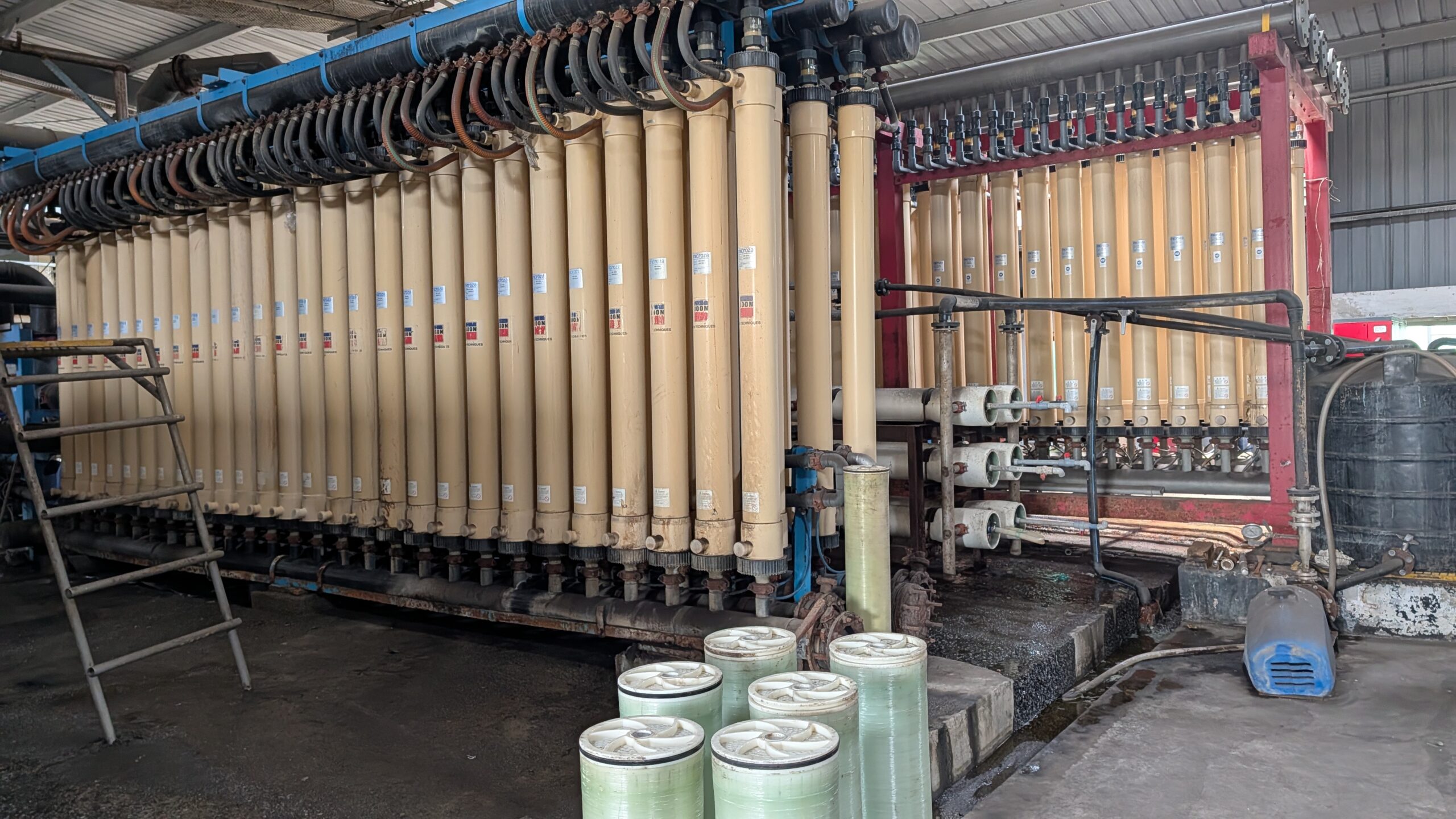
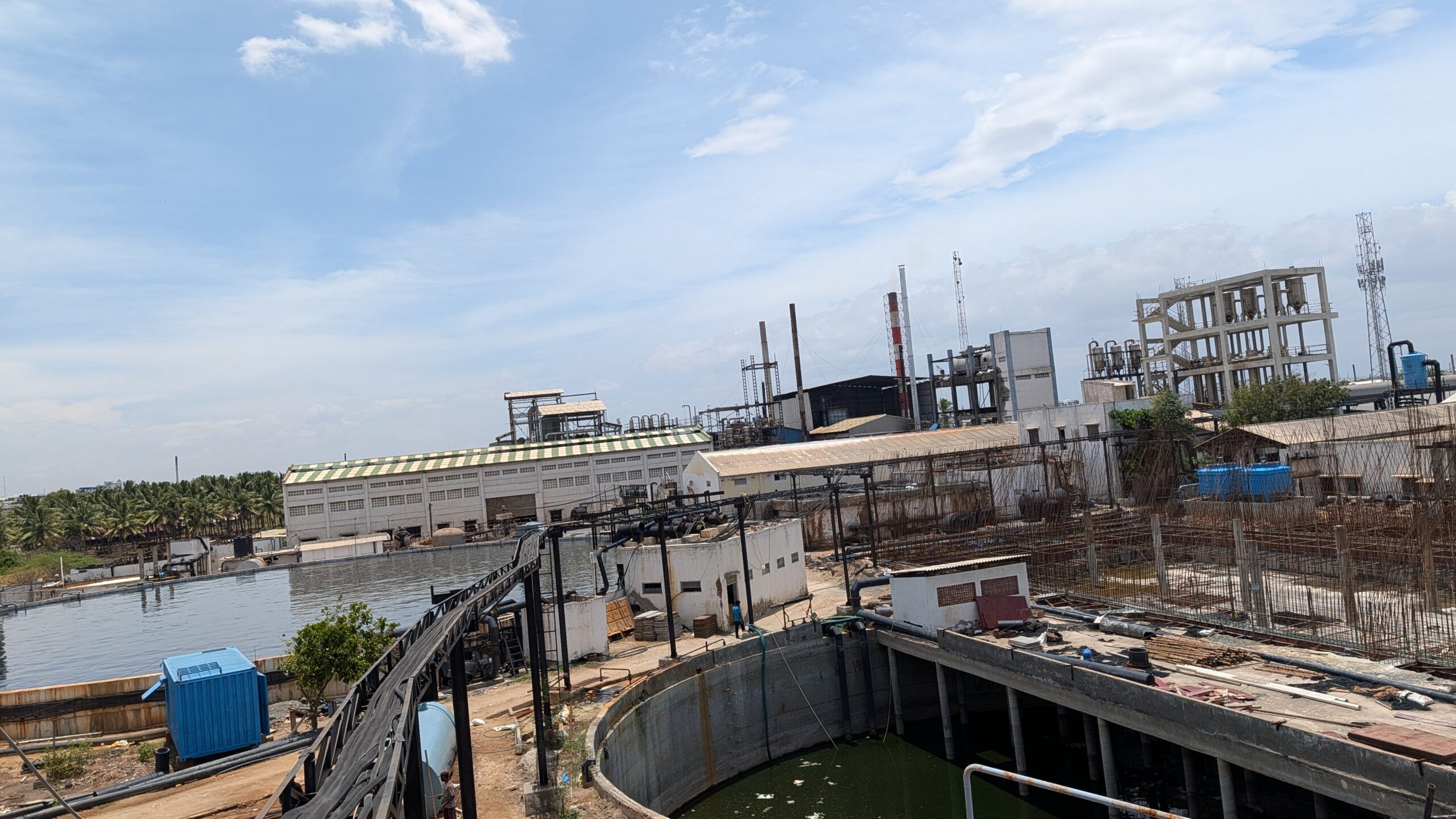
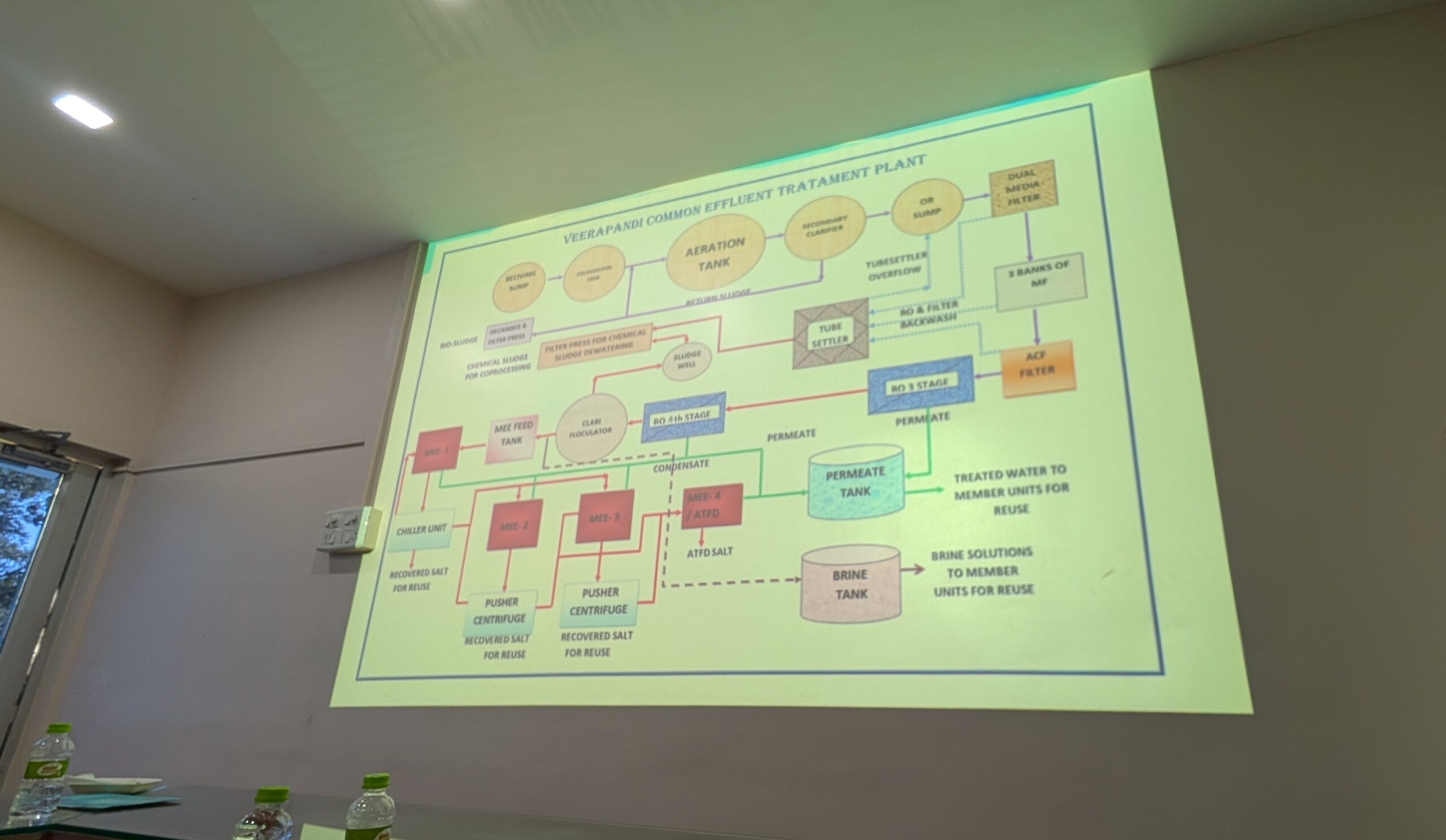
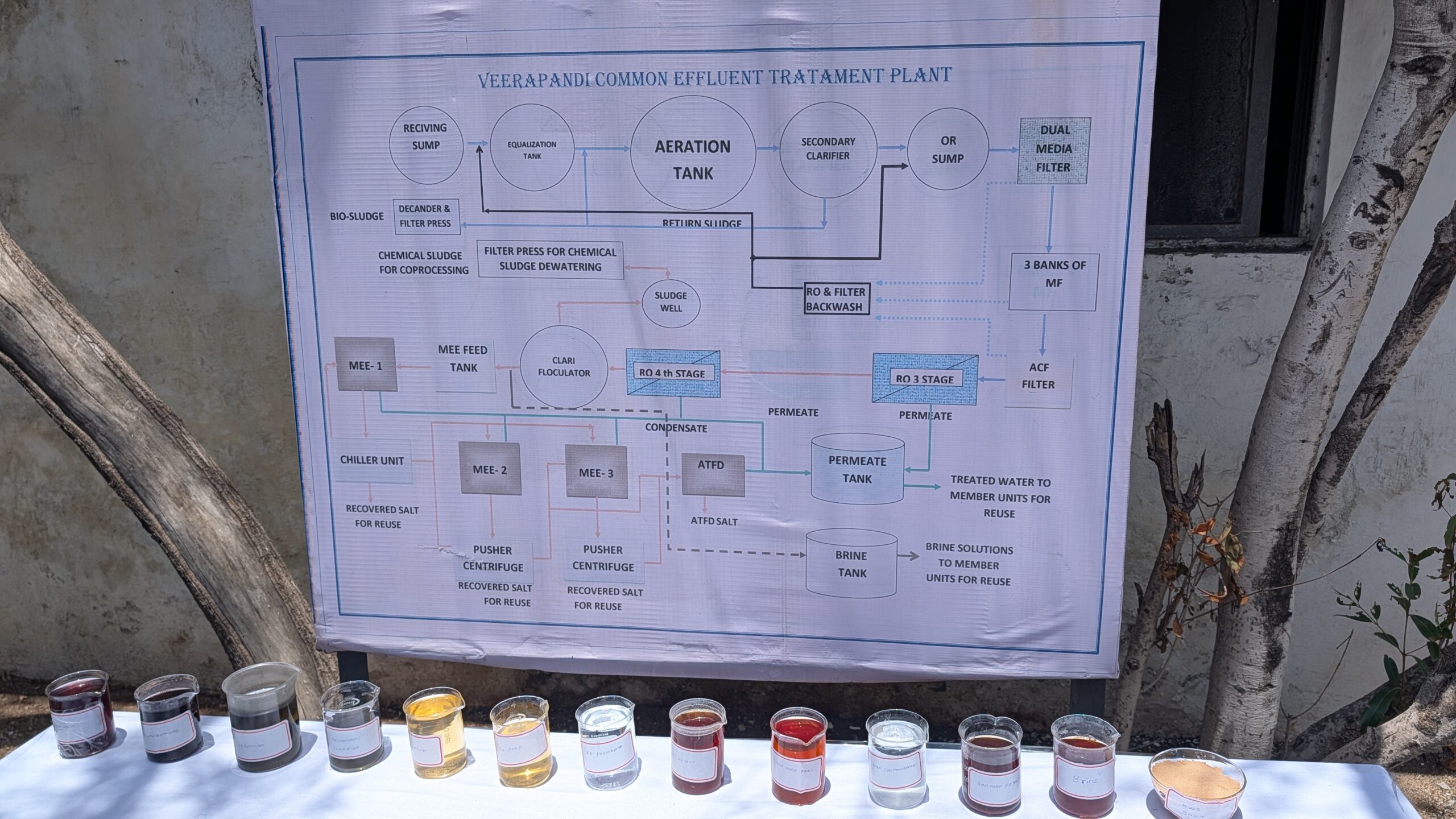
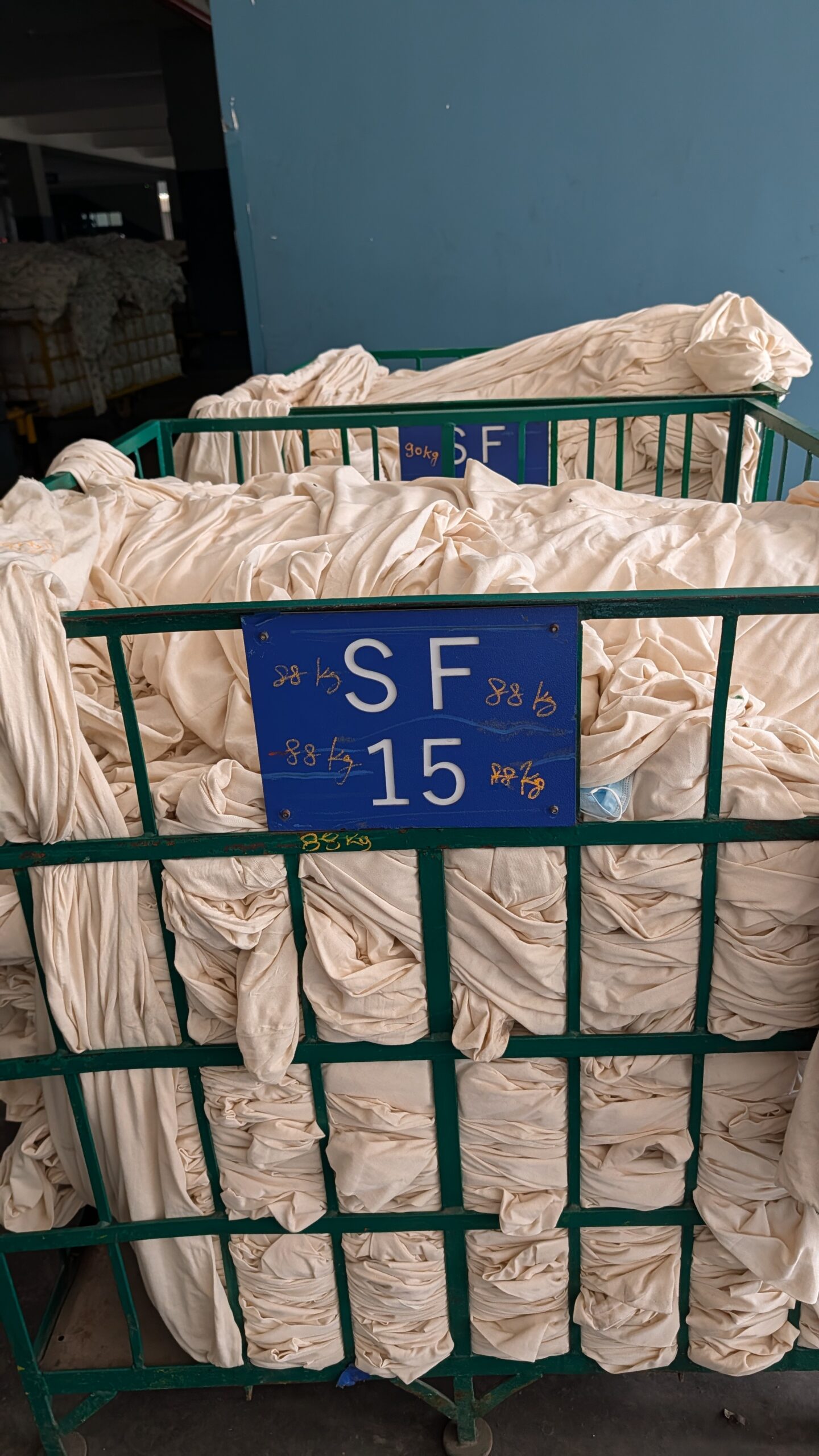
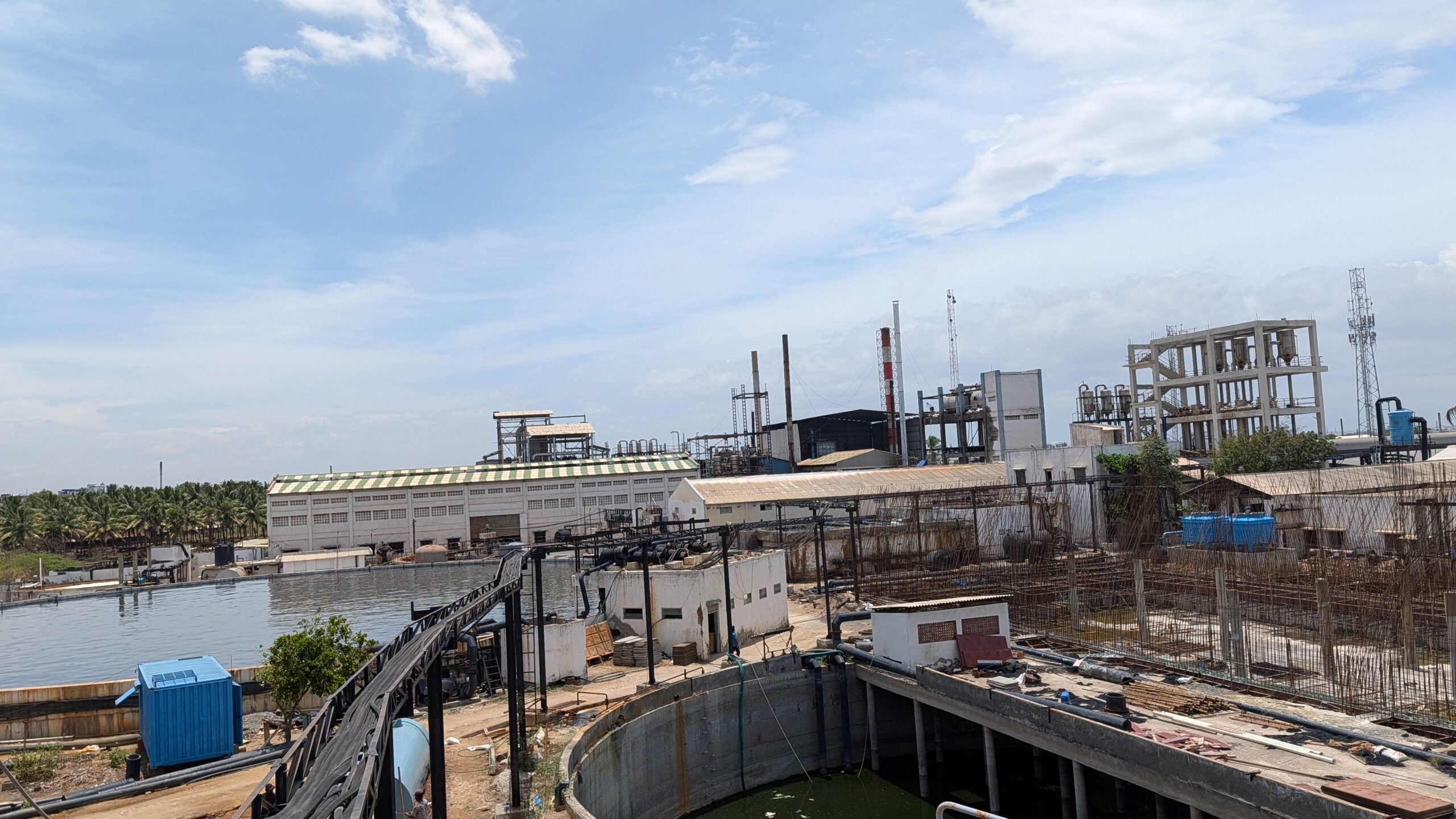
What made the Tiruppur session different from a generic ESG briefing was that panellists could point to physical infrastructure, not intentions. Eighteen Common Effluent Treatment Plants and sixty Individual Effluent Treatment Plants process around 130 million litres of dye-house effluent daily, recycling roughly 96 percent of it — a zero liquid discharge (ZLD) system journalists were taken to see in person at the Veerapandi Common Effluent Treatment Plant on day two. Renewable generation across the cluster totals close to 1,950 MW against consumption of about 350 MW, making Tiruppur a net exporter of clean power to the Tamil Nadu grid rather than a net drain on it. Nine years of plantation drives have added an estimated 2.2 million trees and helped restore thirteen to fourteen lakes.
This is the part other clusters cannot simply announce their way into. A DPP audit does not accept a press release; it wants metering records, treatment-plant throughput data, and energy-source documentation going back years, not months. Clusters starting that build-out today are, on Tiruppur’s own timeline, roughly a decade behind — Tiruppur’s ZLD mandate traces back to a 2011 Madras High Court order that shut down every dyeing and bleaching unit on the Noyyal river until treatment infrastructure was built. It was a brutal, forced restart: 700 units closed, an estimated 50,000 workers displaced, before eighteen CETPs reopened in 2012 under a zero-discharge regime.
The uncomfortable lesson for Surat, Ludhiana and Kolkata is that Tiruppur’s advantage was not planned foresight so much as a court-ordered crisis that arrived early. Other clusters may not get a court order. They will still get the buyer requirement.
The part Tiruppur hasn’t solved either
It would be a mistake for other clusters to read this as “build the infrastructure and the premium follows automatically.” Panellists in Tiruppur were candid that even with a decade’s head start, the cluster has struggled to convert its compliance readiness into commercial advantage — buyers are not yet reliably paying more for verified sustainability, because the certification and benchmarking ecosystem that would let them do so consistently is still catching up to the physical infrastructure. That is arguably the more useful lesson for a cluster starting from scratch today: build the traceability systems and the financing relationships in parallel, not sequentially, because the infrastructure alone does not sell itself.
That financing question was the subject of panel three, where SIDBI’s Deputy General Manager Mr Ramachandran and TEA’s Kumar Duraiswamy (also CEO of Eastern Global Clothing) discussed the climate-linked finance instruments and government schemes designed to help smaller units de-risk exactly this kind of capital-intensive build-out — the sort of institutional support that a cluster beginning its transition now would need to seek out early, rather than after buyers start asking for documentation the cluster cannot yet produce.
A ten-year clock, not a ten-year suggestion
Tamil Nadu’s textile and export sector, and Tiruppur in particular, employs well over a million workers and generated roughly INR 46,000 crore in exports in FY26, with TEA targeting close to INR 1 lakh crore by 2030 as part of a national push to lift India’s textile exports toward $100 billion. Every cluster competing for the same global buyers is chasing a version of that same growth curve — and every one of those buyers is moving toward the same verification standards Tiruppur has spent over a decade quietly building.
The panel’s closing message to journalists, delivered by Business Line Consulting Editor Mr Ramesh, was framed as a media challenge: find the human and business stories inside this transition before it becomes a crisis story instead. For clusters outside Tamil Nadu, the more urgent version of that message is operational: the runway to build ZLD-grade treatment capacity, metered renewable energy, and auditable traceability records is measured in years, not quarters. Tiruppur’s story is proof it can be done — and proof of how long it takes.
The next article in this series looks at where even Tiruppur, for all its infrastructure, is still losing the argument: not on the shop floor, but on the world’s perception of what it has actually built.
📸 Photo & video archive from this workshop
Ground-level photographs and video from both days of the workshop, including the Veerapandi treatment plant walkthrough and the exporter shop-floor visit referenced above.
- Full Textile Industry Field-Visit Album — Day 2, all three site visits combined
- Dyeing Unit Visit — Jeyavishnu Clothing Pvt Ltd
- Water Treatment Plant Visit — Veerapandi CETP
- Exporter / Manufacturing Unit Visit — Esstee Exports India Pvt Ltd
- Knit Show / Knit Fair Gallery
Readers and partner publications needing full-resolution copies can write to neutralodishanews@gmail.com — INR 30 for access to any single folder above, or INR 99 for all-access across the full workshop archive. This nominal charge goes towards drive storage and picture-server maintenance.